It Rains Fishes
Entering Thailand Slowly
Some books explain a country. Others let you enter it.
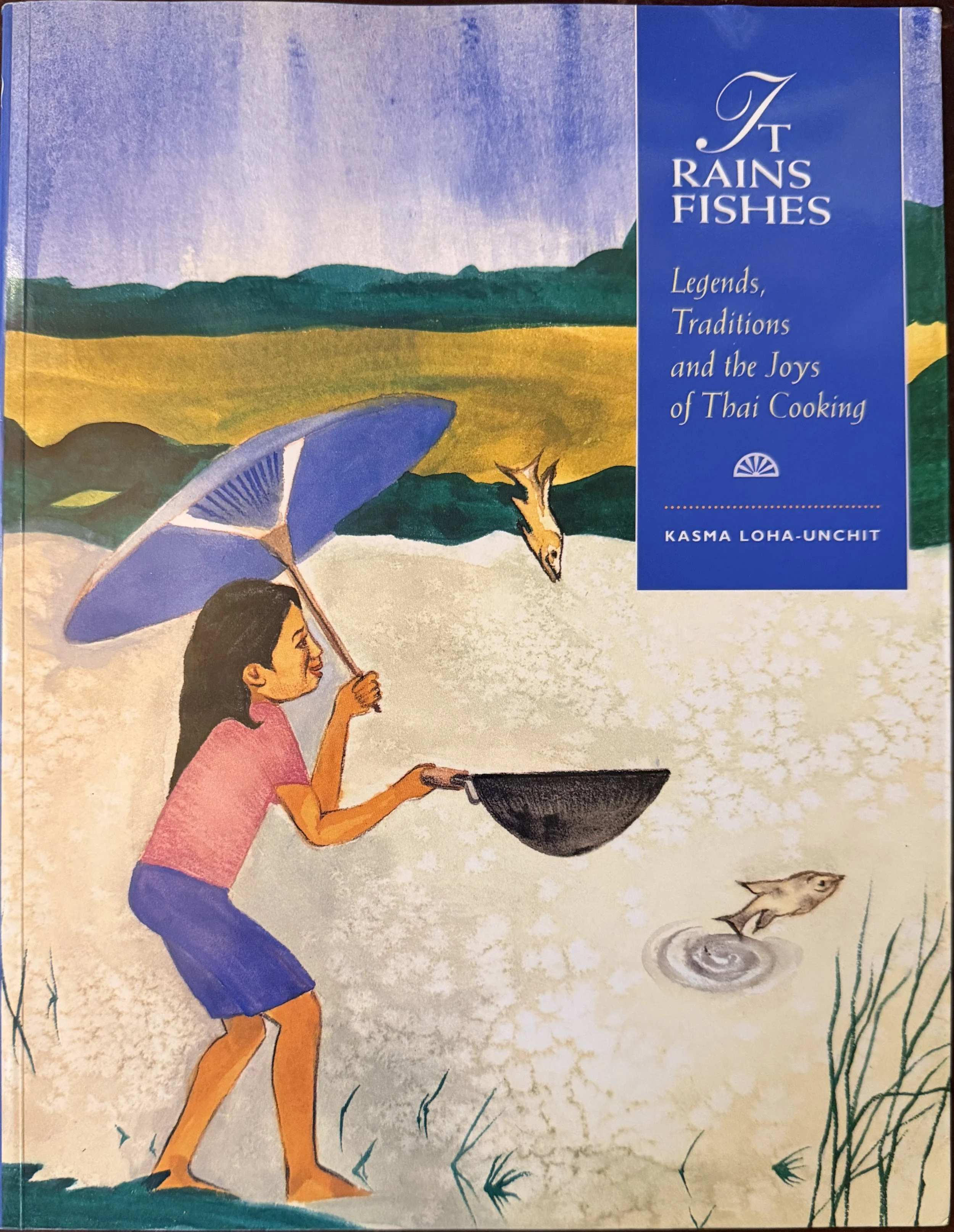
It Rains Fishes by Kasma Loha-Unchit. A cookbook that gradually becomes something else: a portrait of Thailand through memory, ritual, and everyday life.
At first glance, It Rains Fishes, by Kasma Loha-Unchit, appears to be a cookbook. Recipes fill its pages, accompanied by stories about ingredients and the places they come from. But after spending time with it, I began to read it differently. Food became a way of seeing how daily life in Thailand is connected to memory, family and place.
Travel often begins with images. Before arriving, we imagine a country through what we have already seen: temples, markets or food being prepared on the street. This book offered me another way in.
A recipe can tell you something about where people live and what is available to them. Weather, agriculture and family habits all find their way into what is cooked and how it is eaten.
What I particularly liked about It Rains Fishes is that Thai food never feels presented as something exotic. It belongs to ordinary life. Meals are prepared at home, remembered through families and adapted to what the season provides.
While reading, I found myself imagining the physical details around the food: rain against a metal roof, the humidity near a river, steam rising from a dish while people talked around the table.
Thailand began to feel less like a list of places I intended to visit and more like somewhere people simply lived.
Much contemporary travel media makes places easy to recognise before we ever arrive. We learn to expect certain images and often look for them once we are there.
It Rains Fishes slowed that process down for me. It made me want to pay attention to ordinary life rather than search immediately for what already looked familiar.
That is also the kind of journey I hope to make through Thailand: staying long enough to notice the routines and small details that only become visible with time.
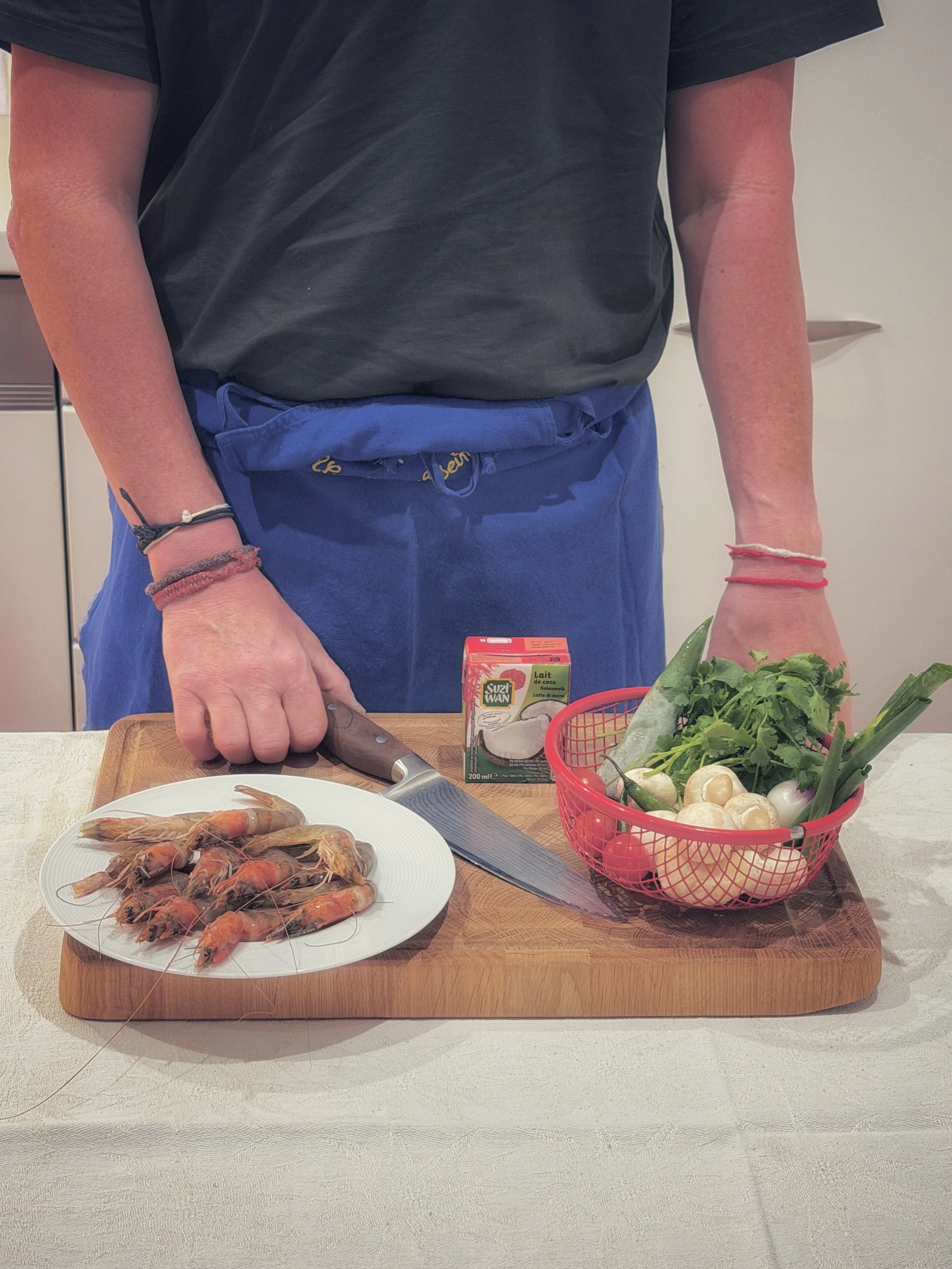
Preparing one of the recipes from It Rains Fishes at home in the Alps, before travelling to Thailand.
Before departure, I tried cooking one of the recipes from the book at home, here in the Alps.
For a moment, Thailand felt a little less distant. Cooking the dish could not reproduce the place it came from, but it made me pay closer attention to the ingredients, the preparation and the habits behind it.
I began to see the meal as part of my preparation for the journey, a small way of approaching Thailand before I arrived.
Perhaps this is what certain books can offer before a journey: a better sense of what to pay attention to once we arrive.
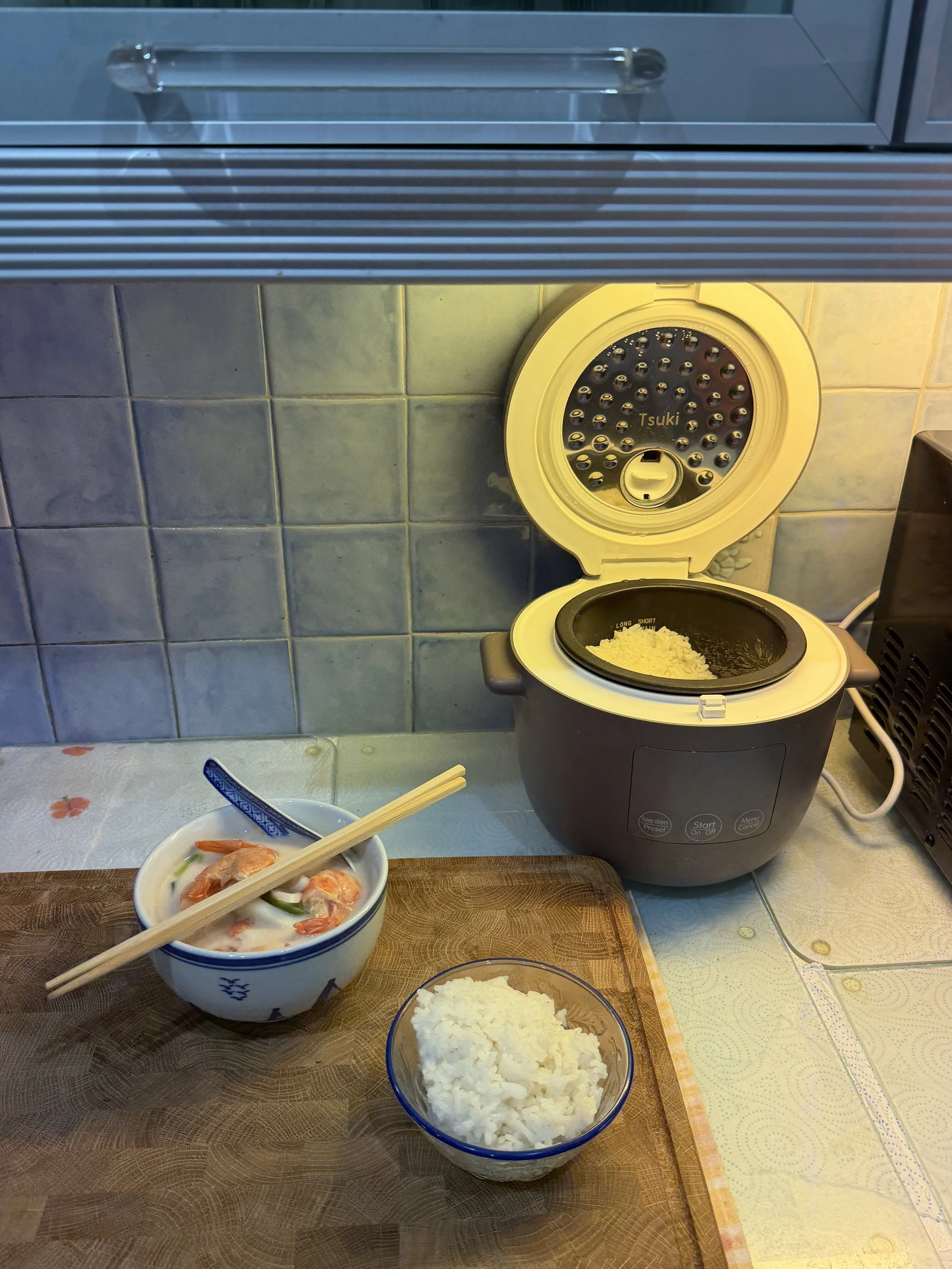
The finished dish. A small taste of Thailand, prepared thousands of kilometres away.