North of Silence
Arrival in Tromsø, reading Hunger
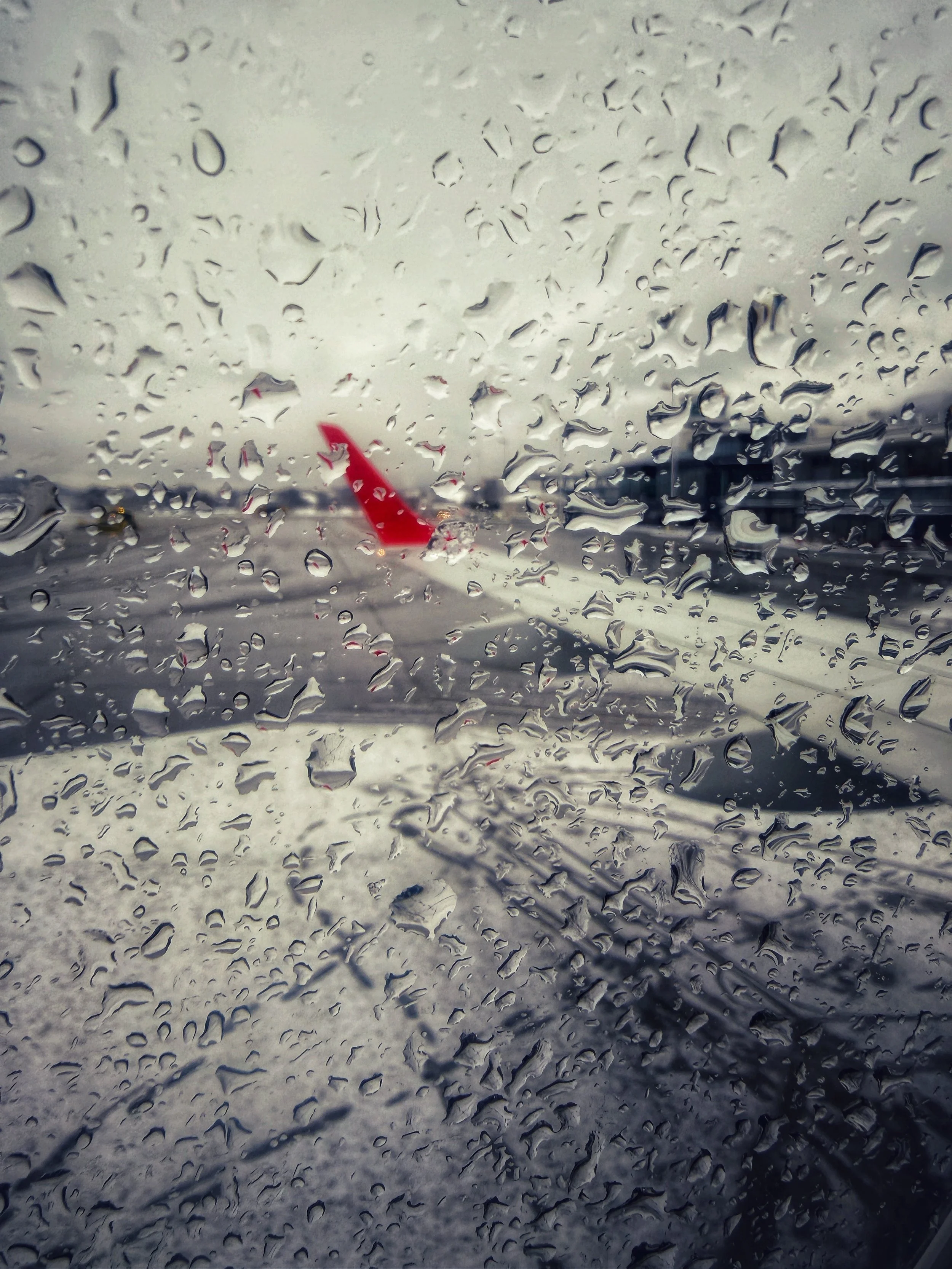
The journey north began in rain.
On the runway in Innsbruck, the view through the airplane window dissolved into water and grey light.
The mountains, usually impossible to ignore, had disappeared behind the clouds.
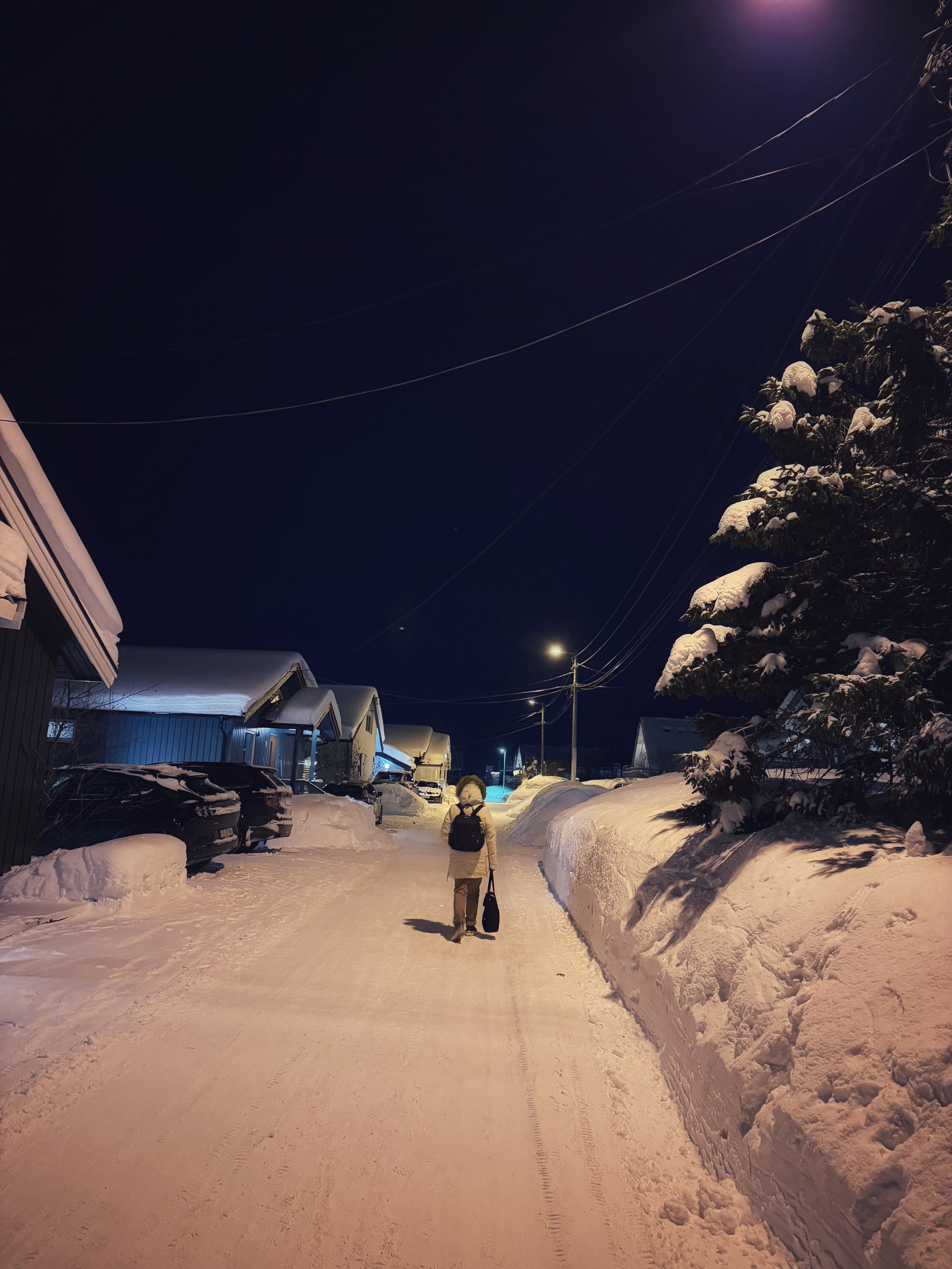
A few hours later we descended into darkness over Tromsø.
In winter, you notice the Arctic gradually. Snow-covered roads, houses lit from inside, and people moving through the darkness with groceries or dogs on leads.
Daily life continues even when daylight seems almost absent.
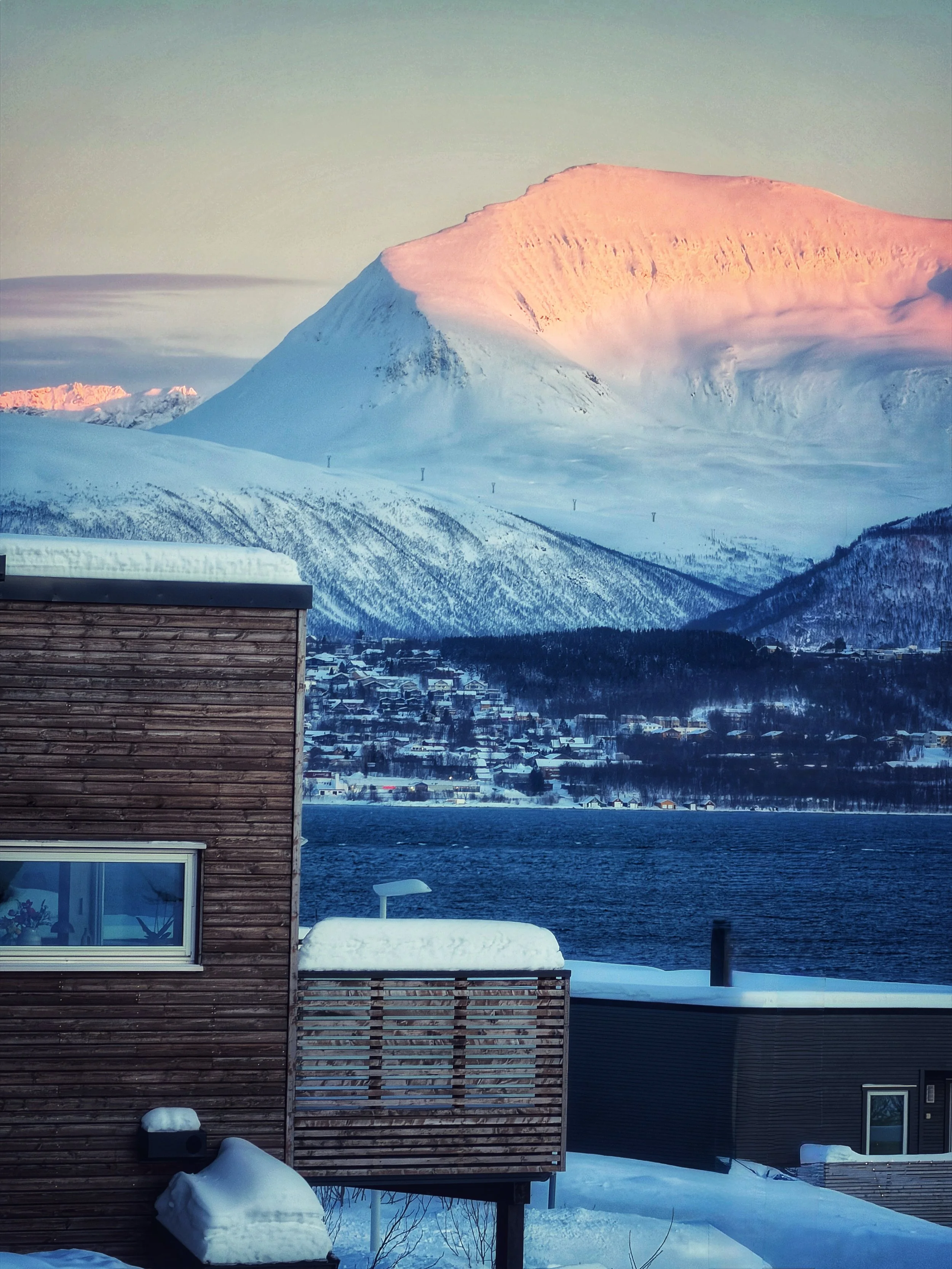
The next morning, the mountains appeared.
At first they were only silhouettes, then a pale pink light touched the peaks above the fjord.
It seemed as though daylight had reached the mountains before it reached the town.
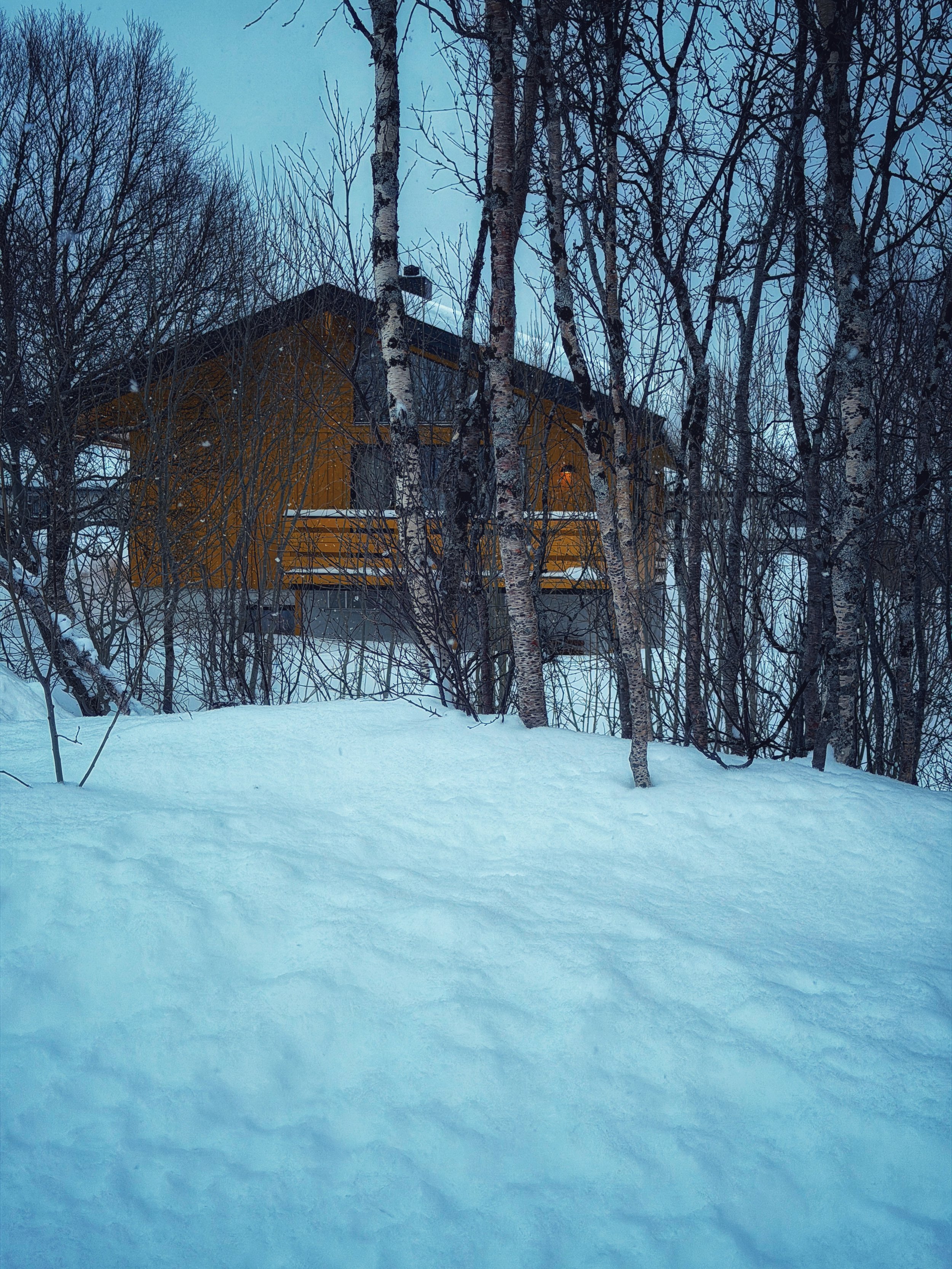
Standing there, I thought of the restless voice in Hunger: a man walking through a northern city, absorbed in his own thoughts while trying to find food, work and somewhere to sleep.
Tromsø was very different from the city in Hamsun’s novel, but the long darkness and the empty spaces made me think again about that isolation.
By the time evening returned, the mountains had disappeared into shadow. The fjord darkened and there were fewer people in the streets. After the brief daylight, Tromsø returned to the winter darkness I had encountered the night before.
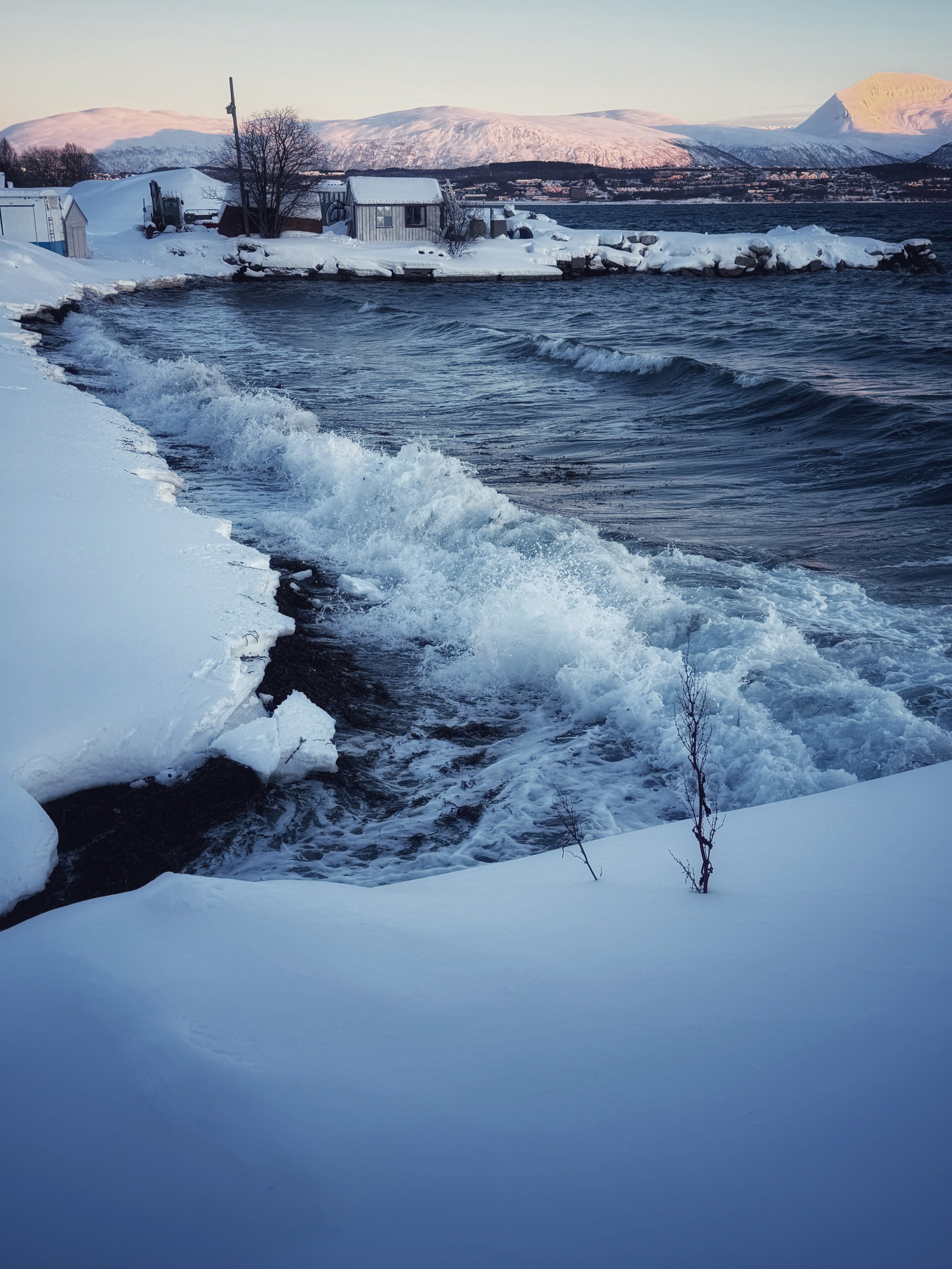
Walking along the water, I thought again of Hunger and of its restless narrator moving through the city, noticing small things even while absorbed in his own thoughts.
Here, too, I found myself paying attention to details: a light in a window, footsteps in the snow, the wind coming off the sea.
The longer I stayed outside, the less I felt the need to make something of it. I simply walked and looked.
Library and Hunger
Reading the North in its own language
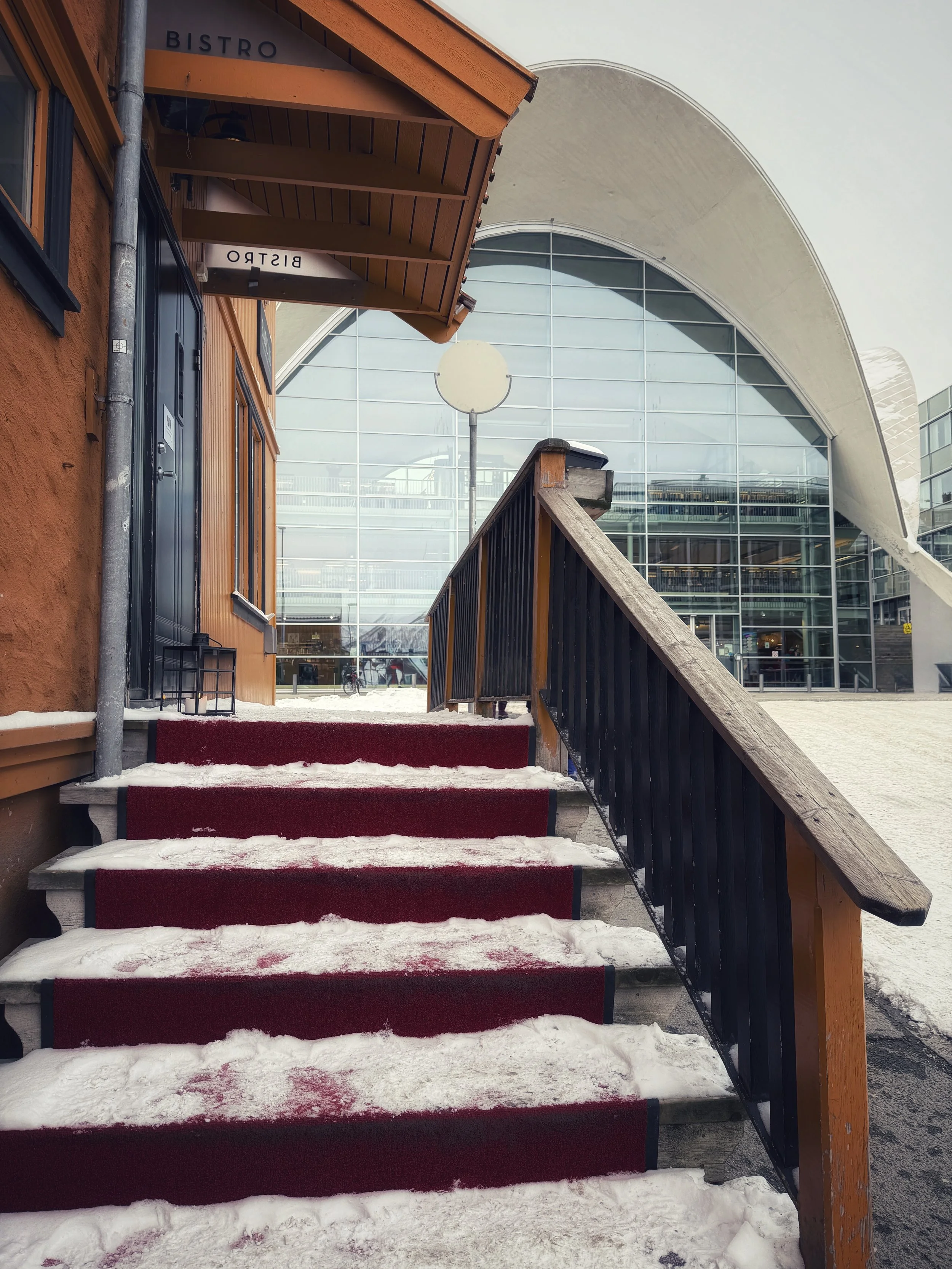
The morning after our arrival I went looking for a library.
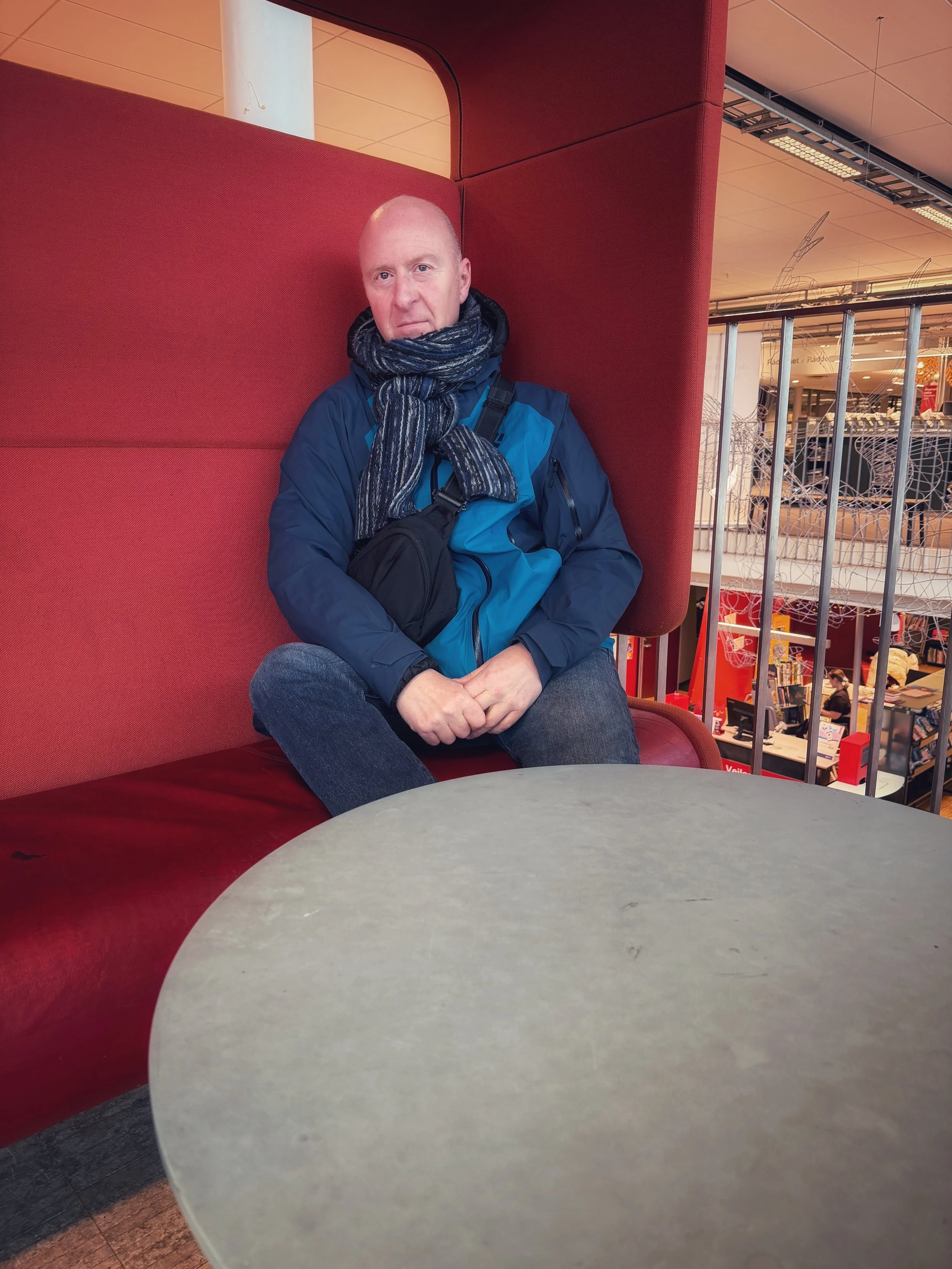
Travel changes the meaning of books. Places that existed only in my imagination become real once I can walk through their streets and see the places the author wrote about.
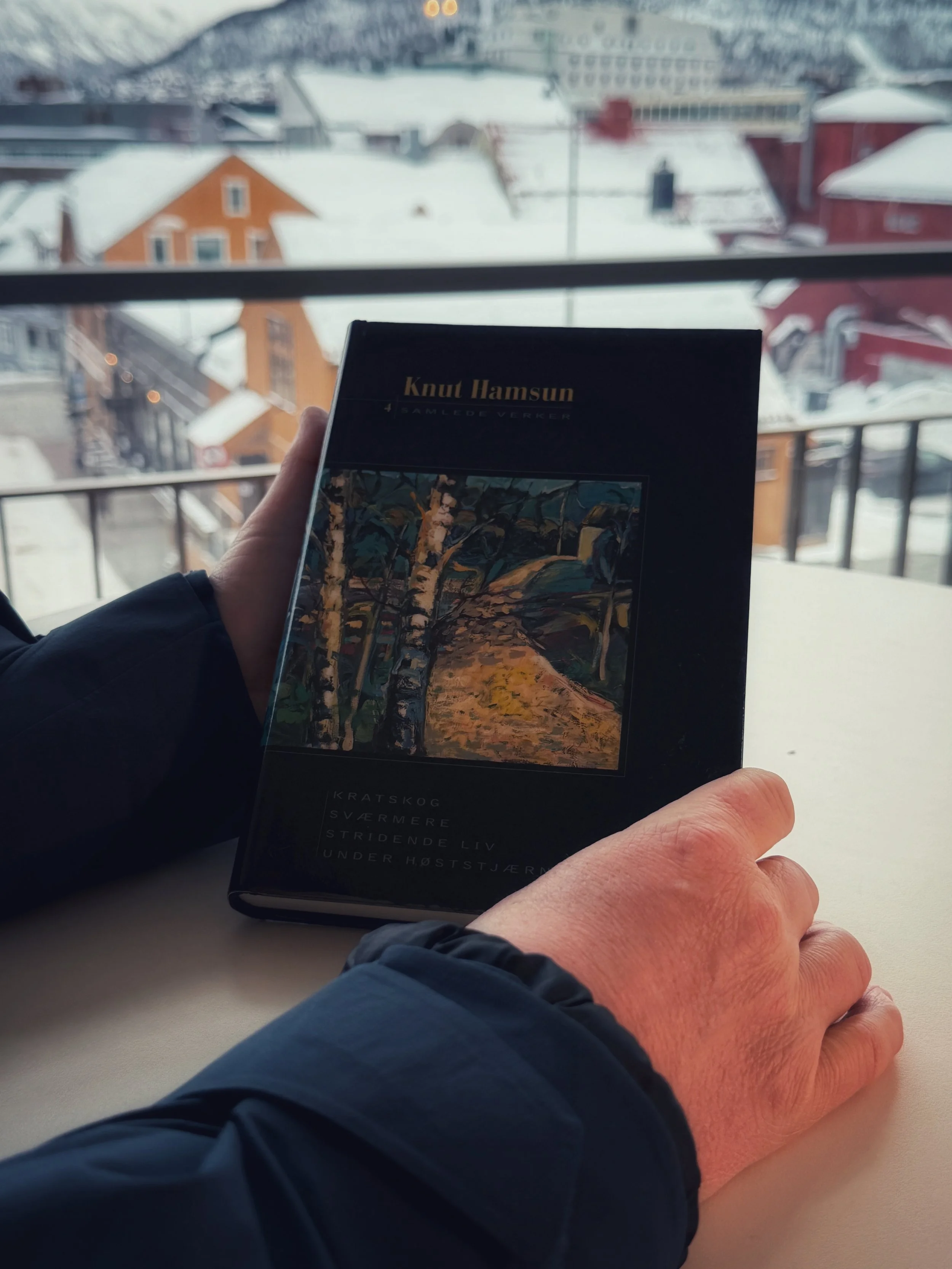
In a quiet corner of the library in Tromsø, I opened Hunger again, this time in the language in which it was written.
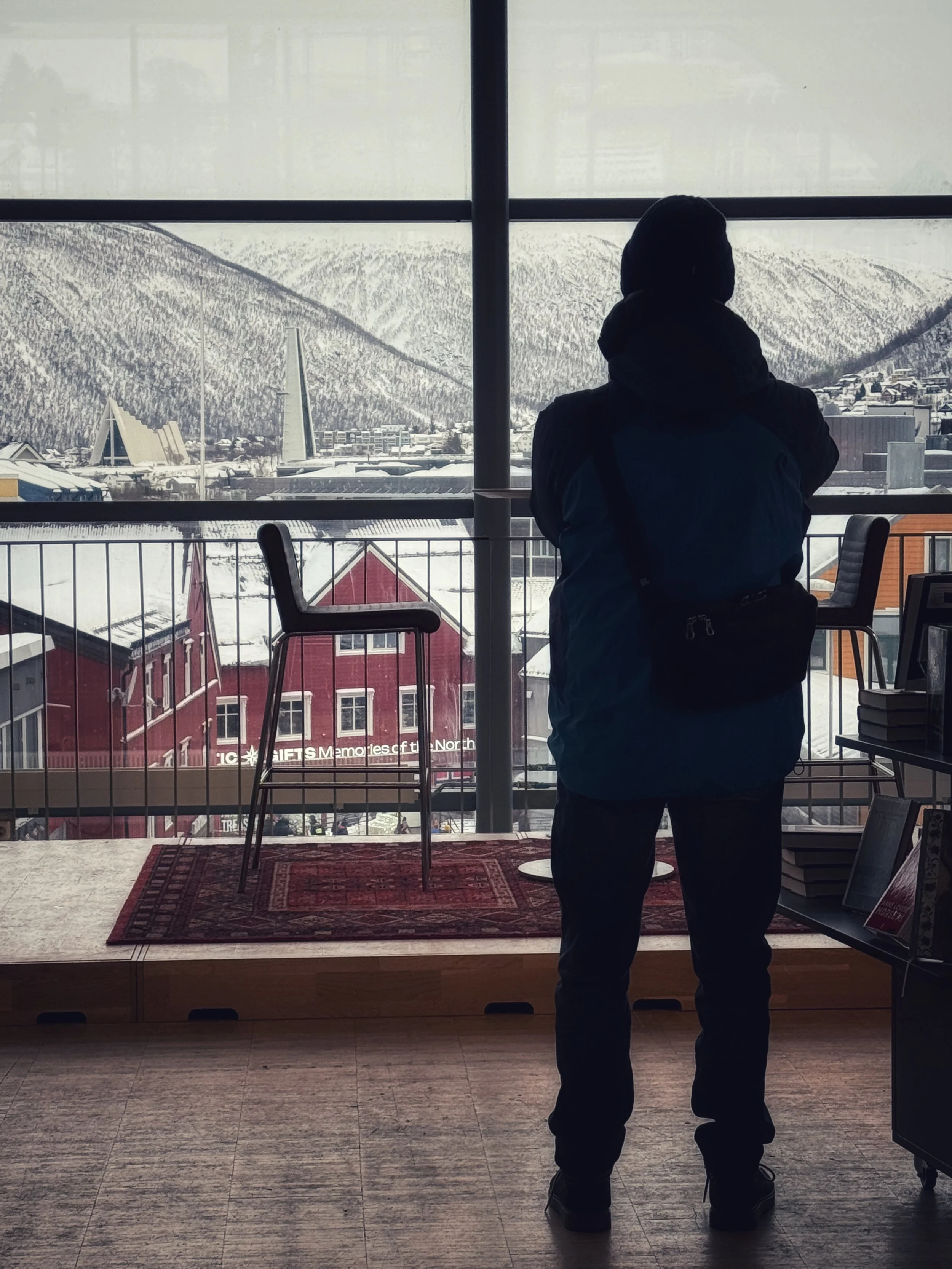
City in Winter Light
In Tromsø, daylight lasts only briefly before darkness returns.
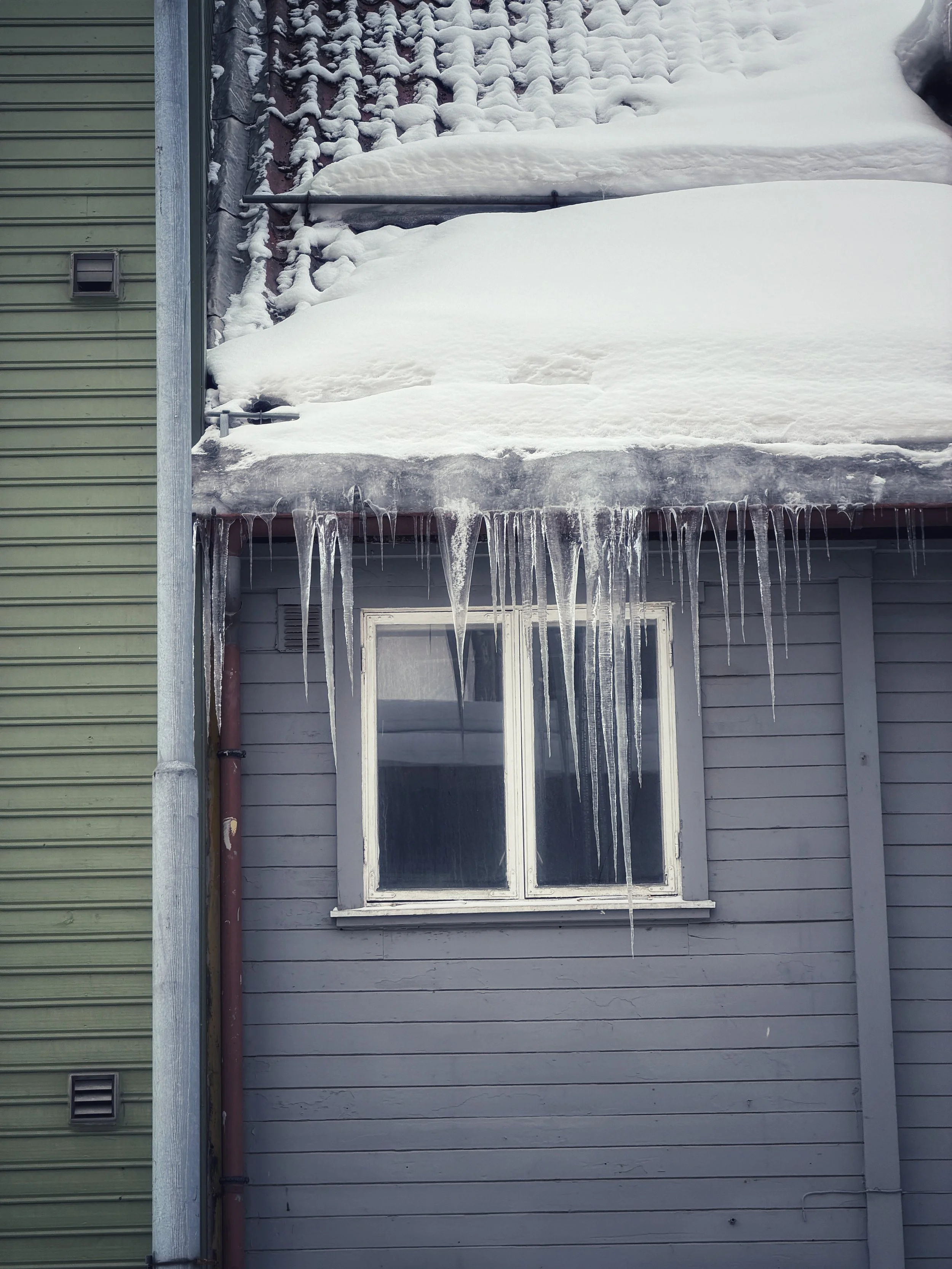
Winter seems to enter the wood itself, gathering along the roofs and hanging from the eaves in long, fragile lines of ice.
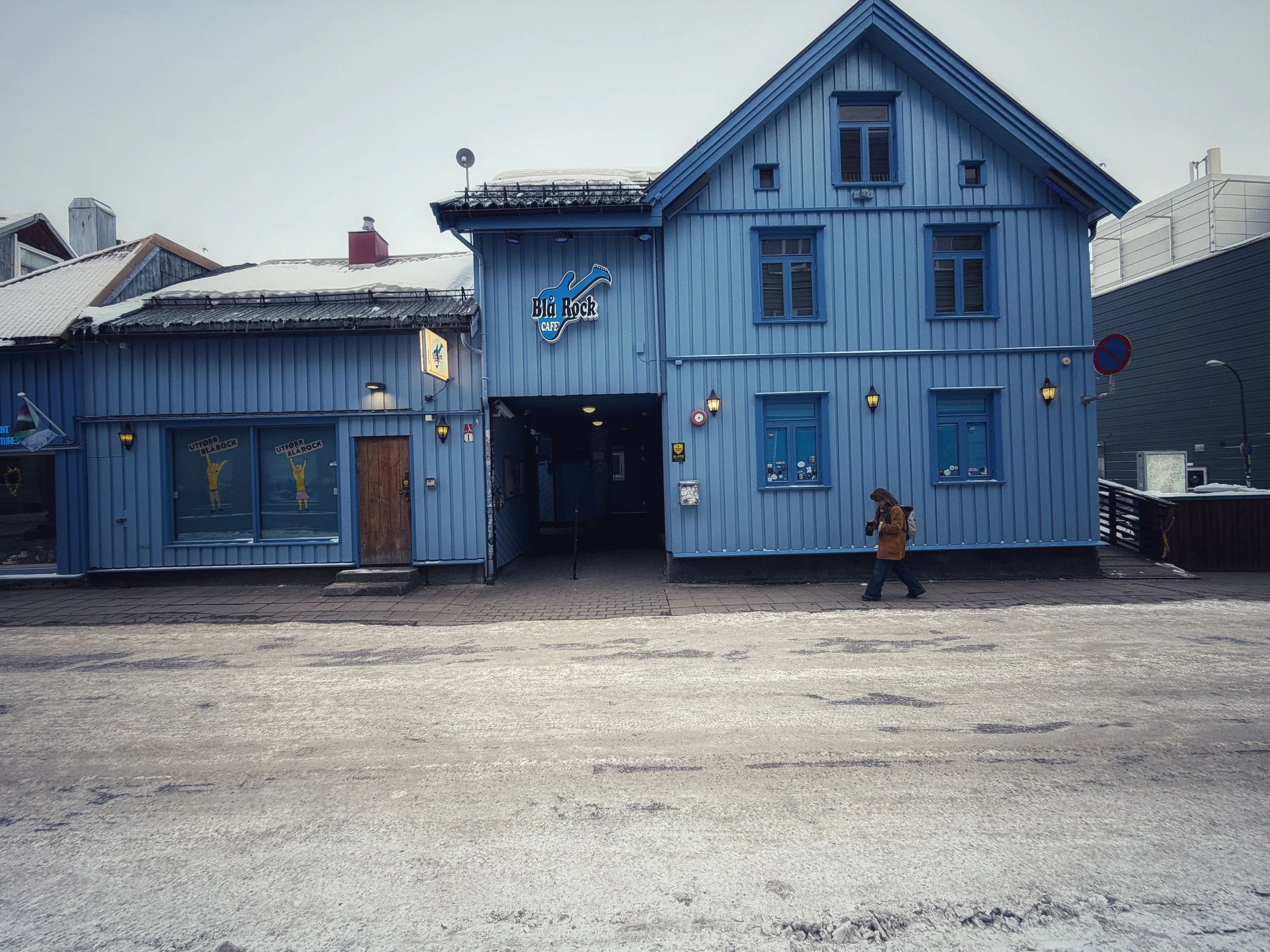
Tromsø comes into view gradually. Painted houses in muted blues and reds stand close together against the cold, their colours softened by snow and pale light.
I began to notice the smaller things: a bar kiosk glowing faintly in the afternoon, an anchor resting beneath a window, a ladder descending into the dark Arctic water.
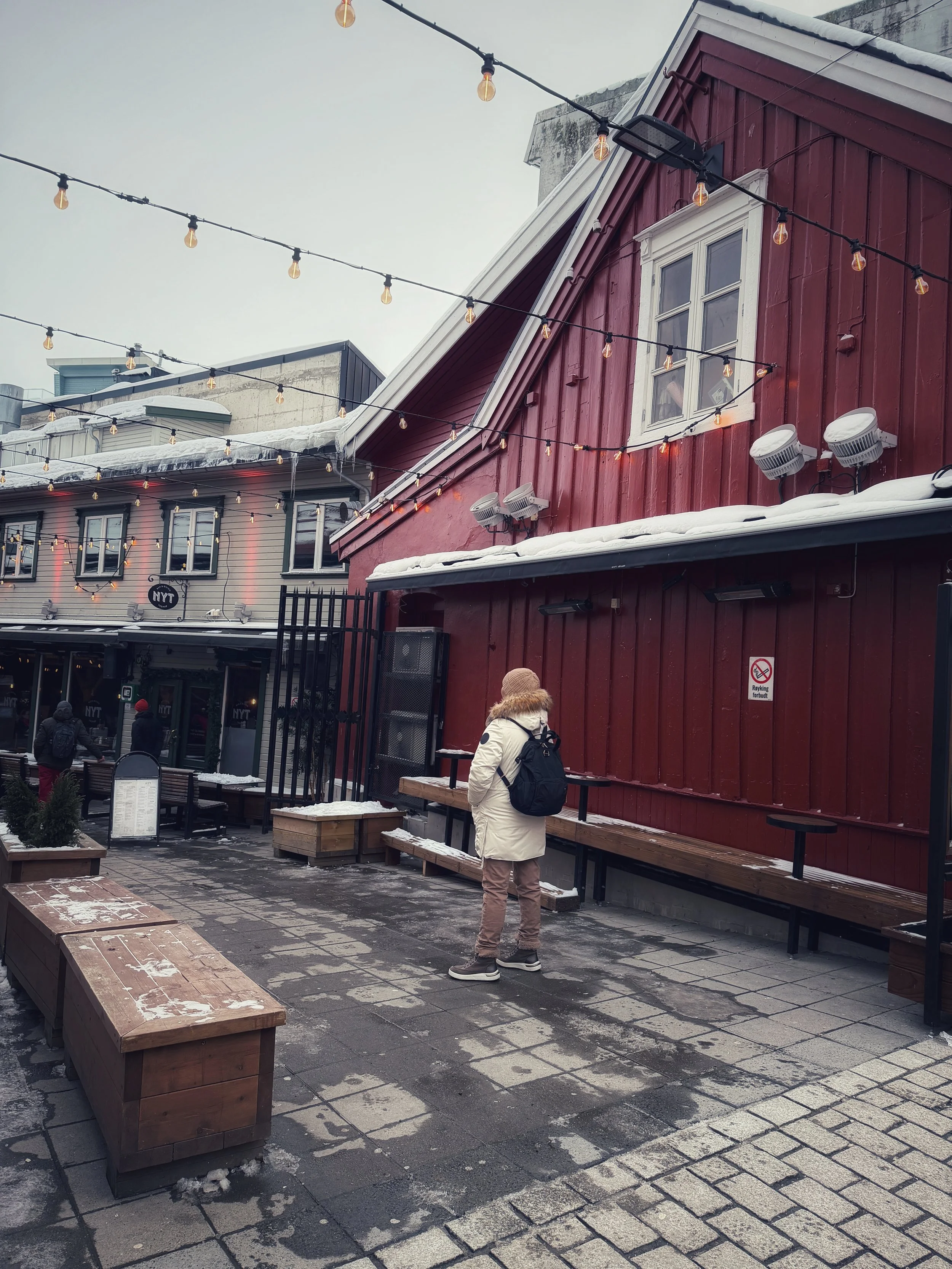
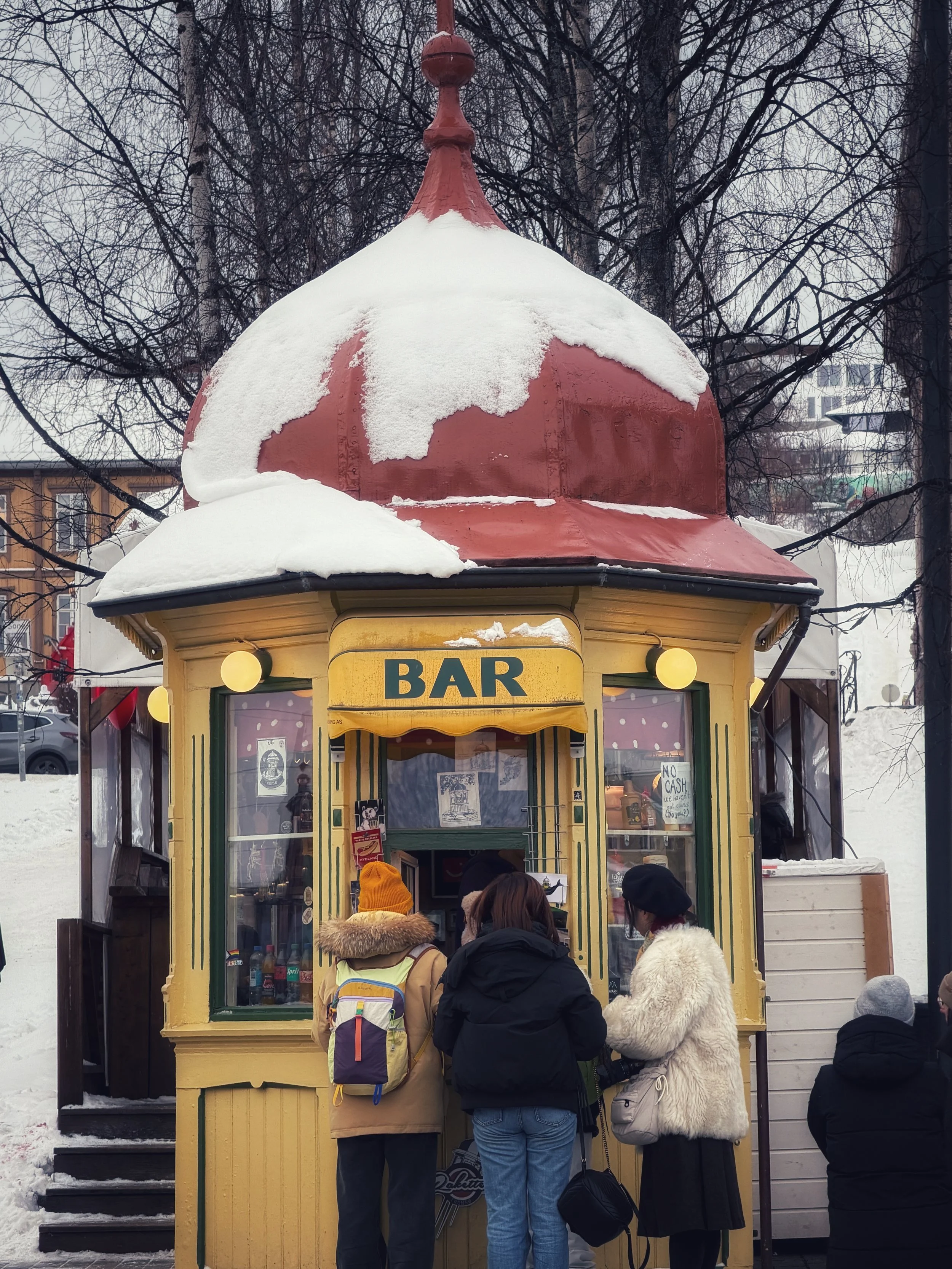
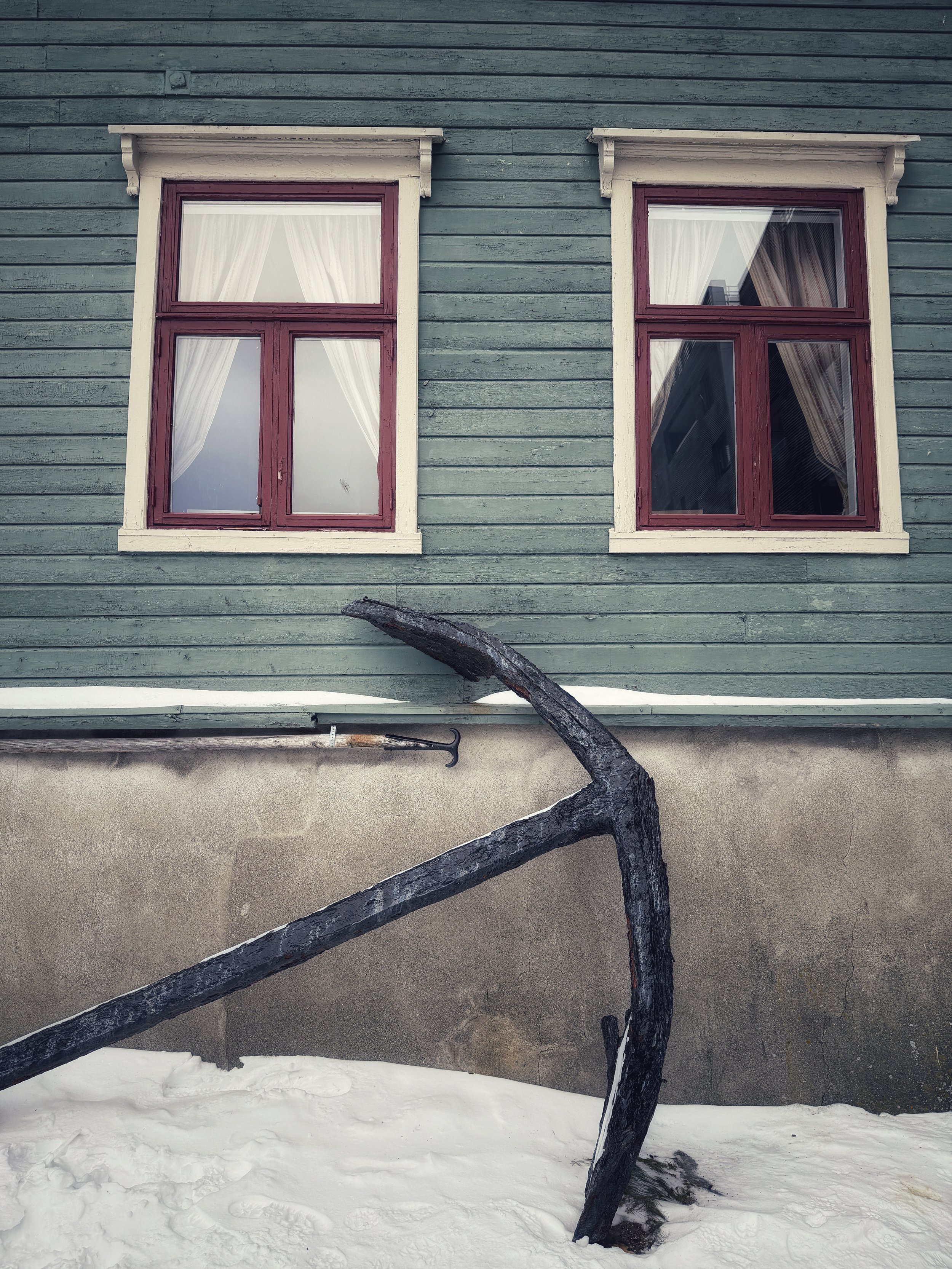
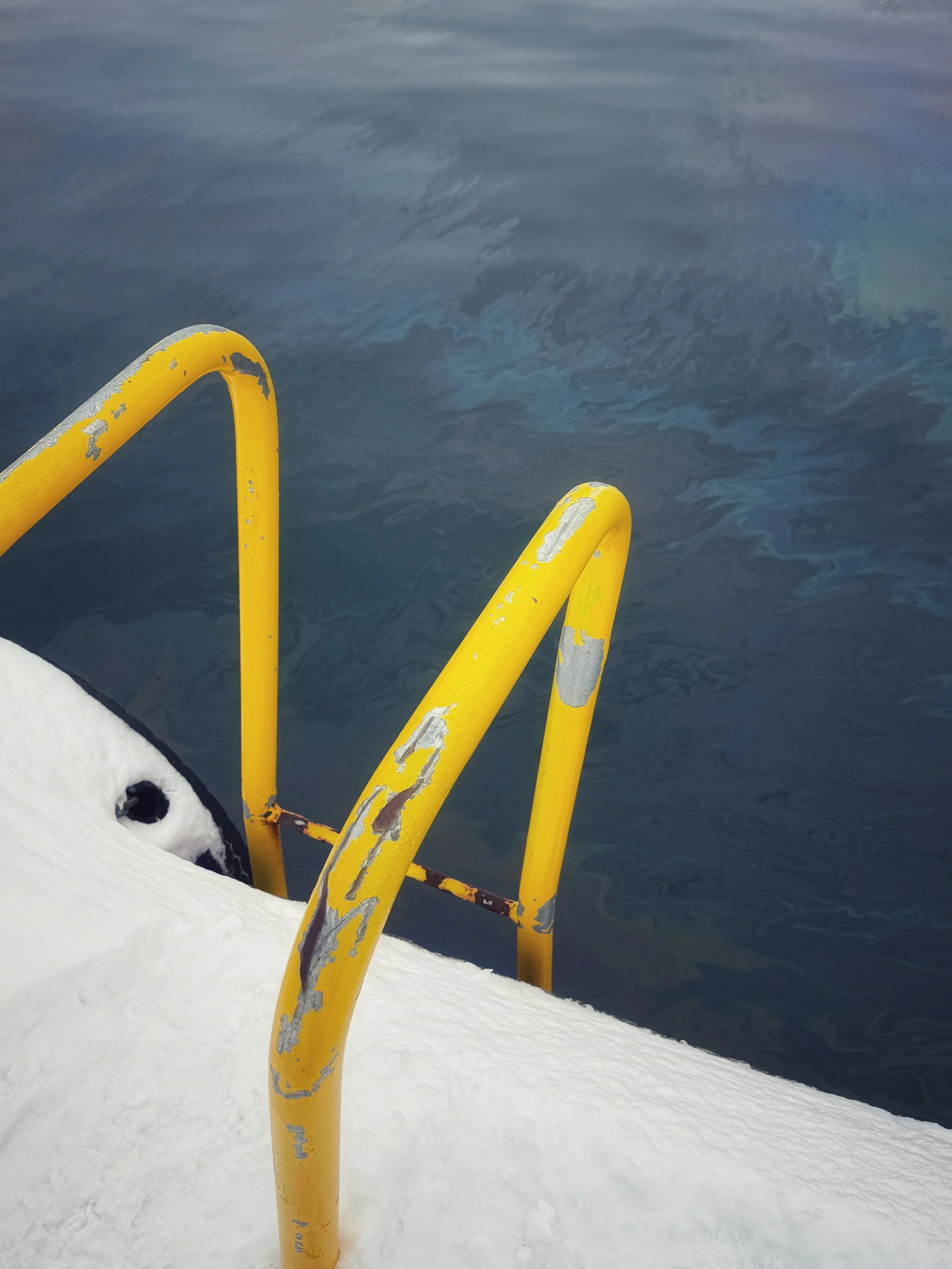
People move through the streets without hurry, stopping for coffee or conversation while the harbor remains still beside them. Boats lie along the quay, their hulls reflected in the calm water of the fjord.
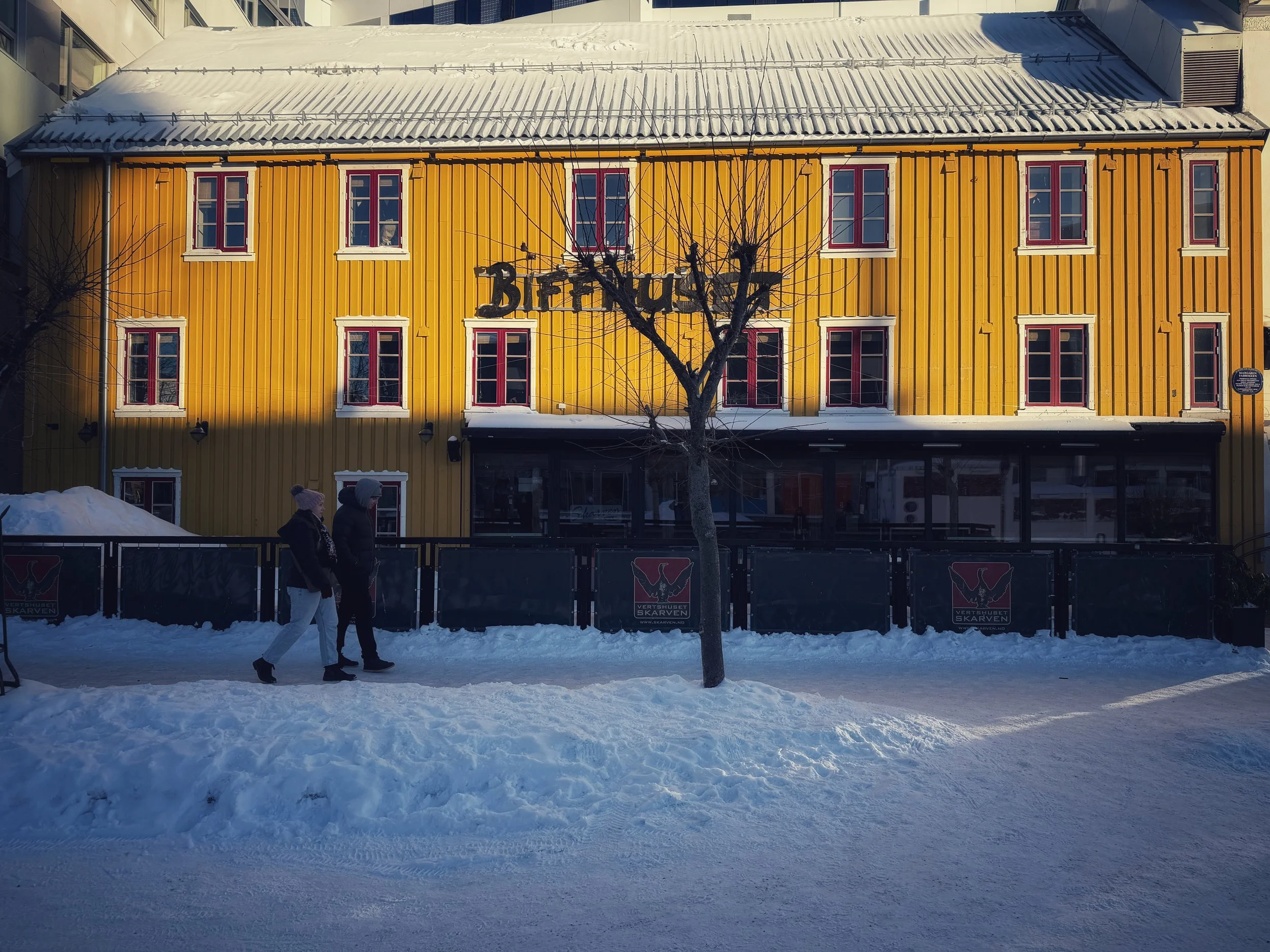
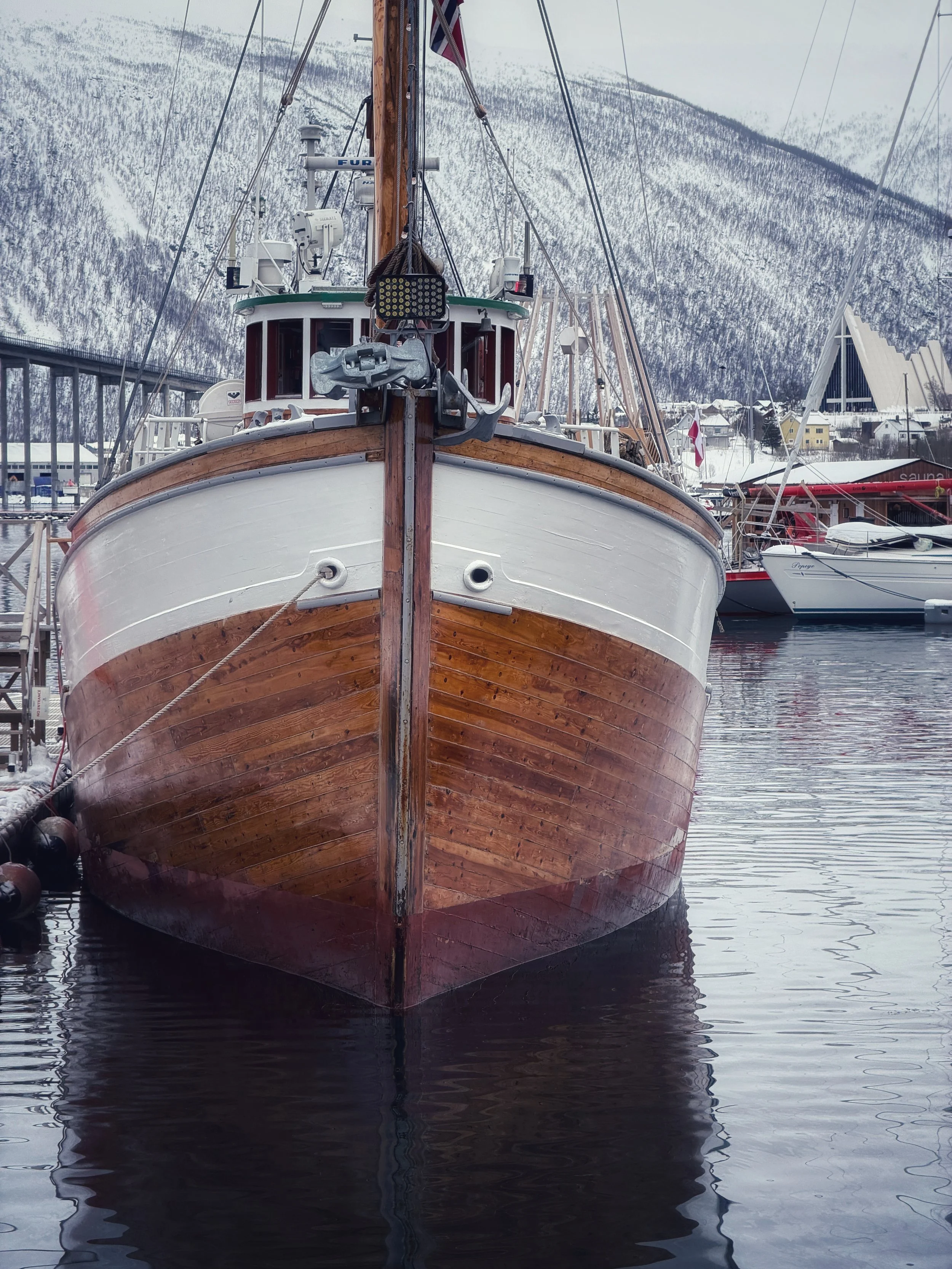
In Tromsø, the sea and the mountains are never far away. The city seems to exist in the narrow space between them.
Winter changes the pace of daily life, while the harbor remains a constant presence beside the town.
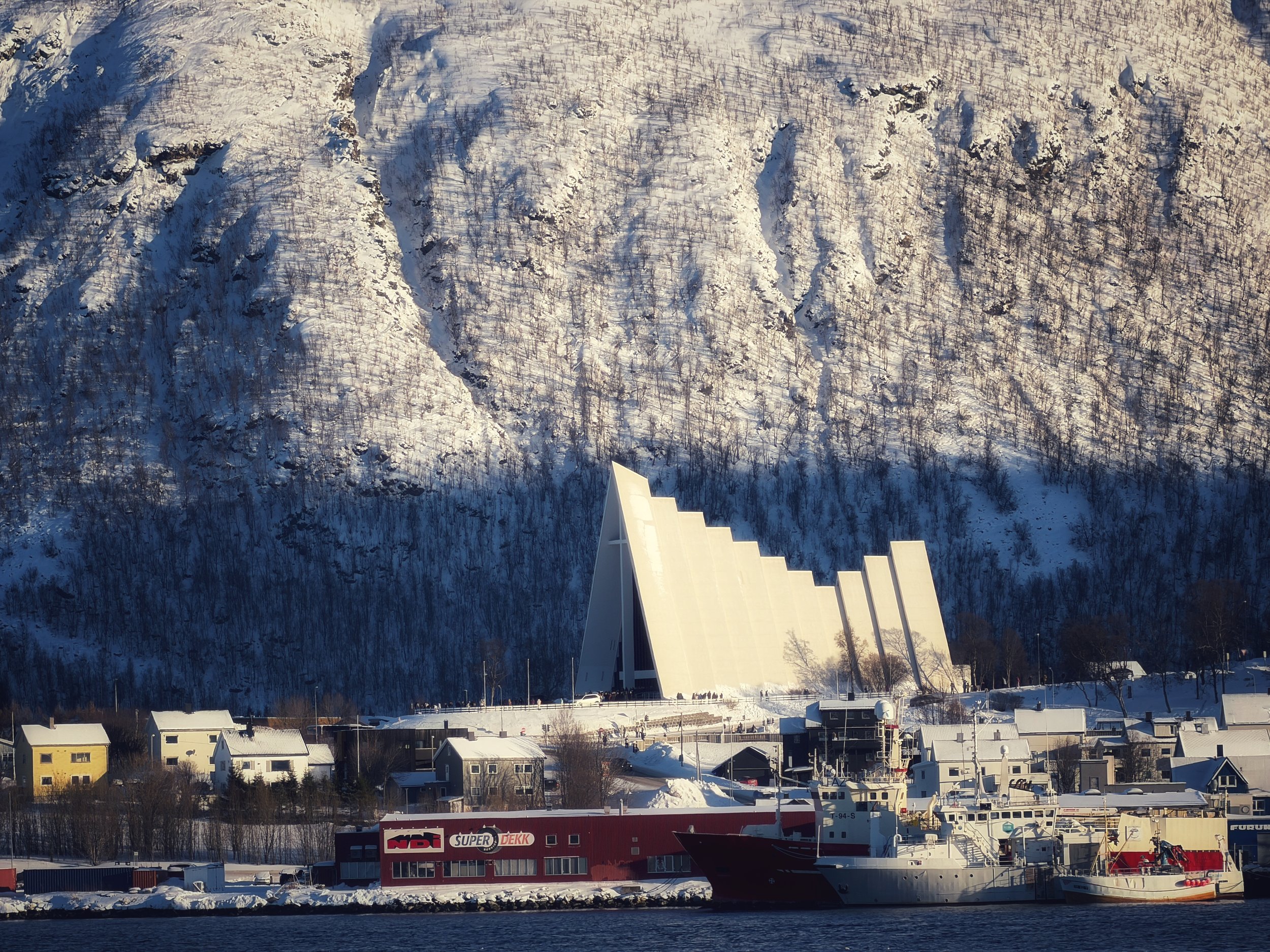
The white geometry of the Arctic Cathedral rises against the slope of the mountains, catching the low northern light like a sail turned toward the horizon.
The Aurora — The Moving Sky
Night arrives slowly in the Arctic winter.
The mountains disappear into shadow, while the snow remains a pale field beneath the stars.
For a long time nothing happens.
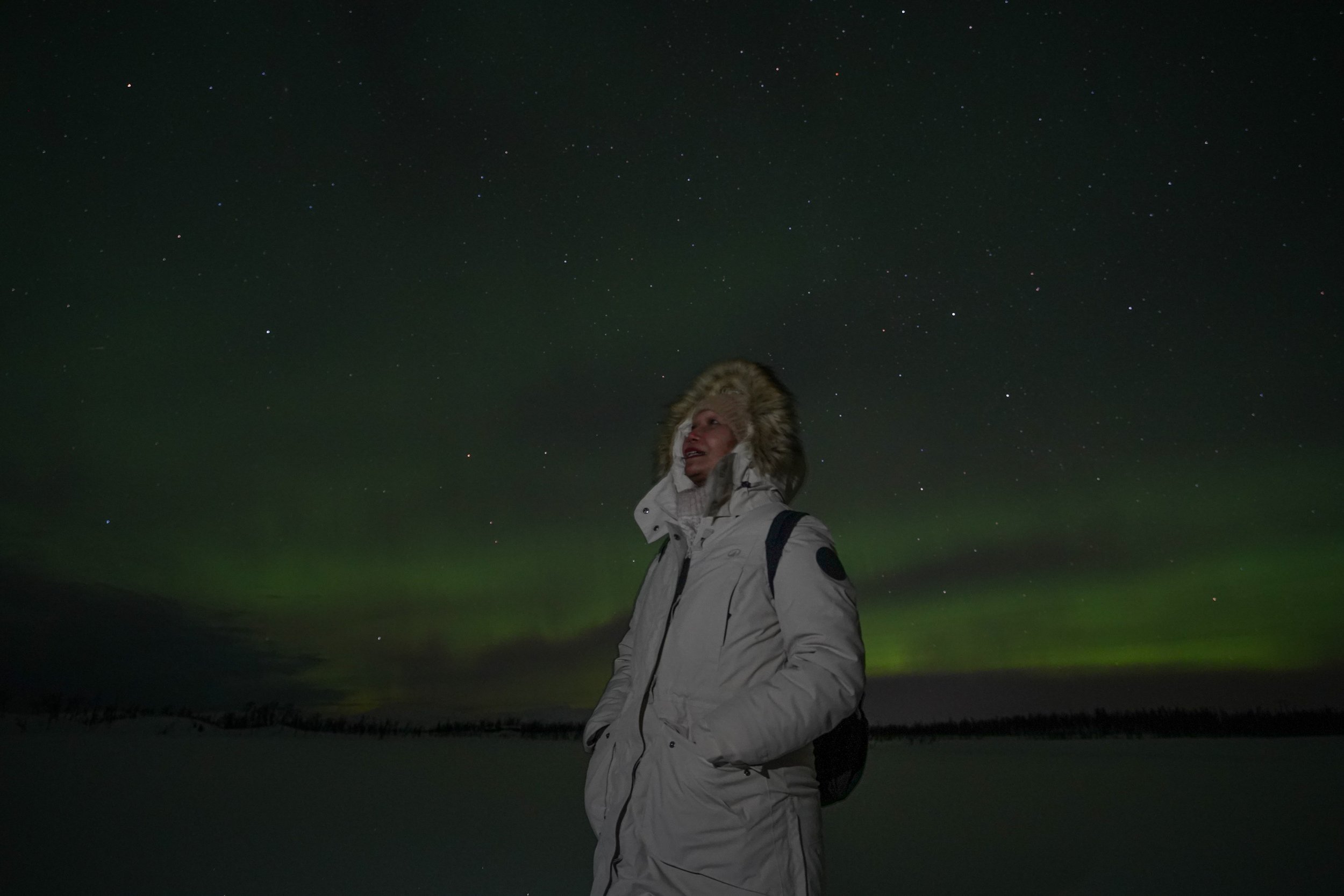
People wait in silence, watching the sky, stamping their feet against the cold. A small fire burns in the snow while breath turns to mist in the dark.
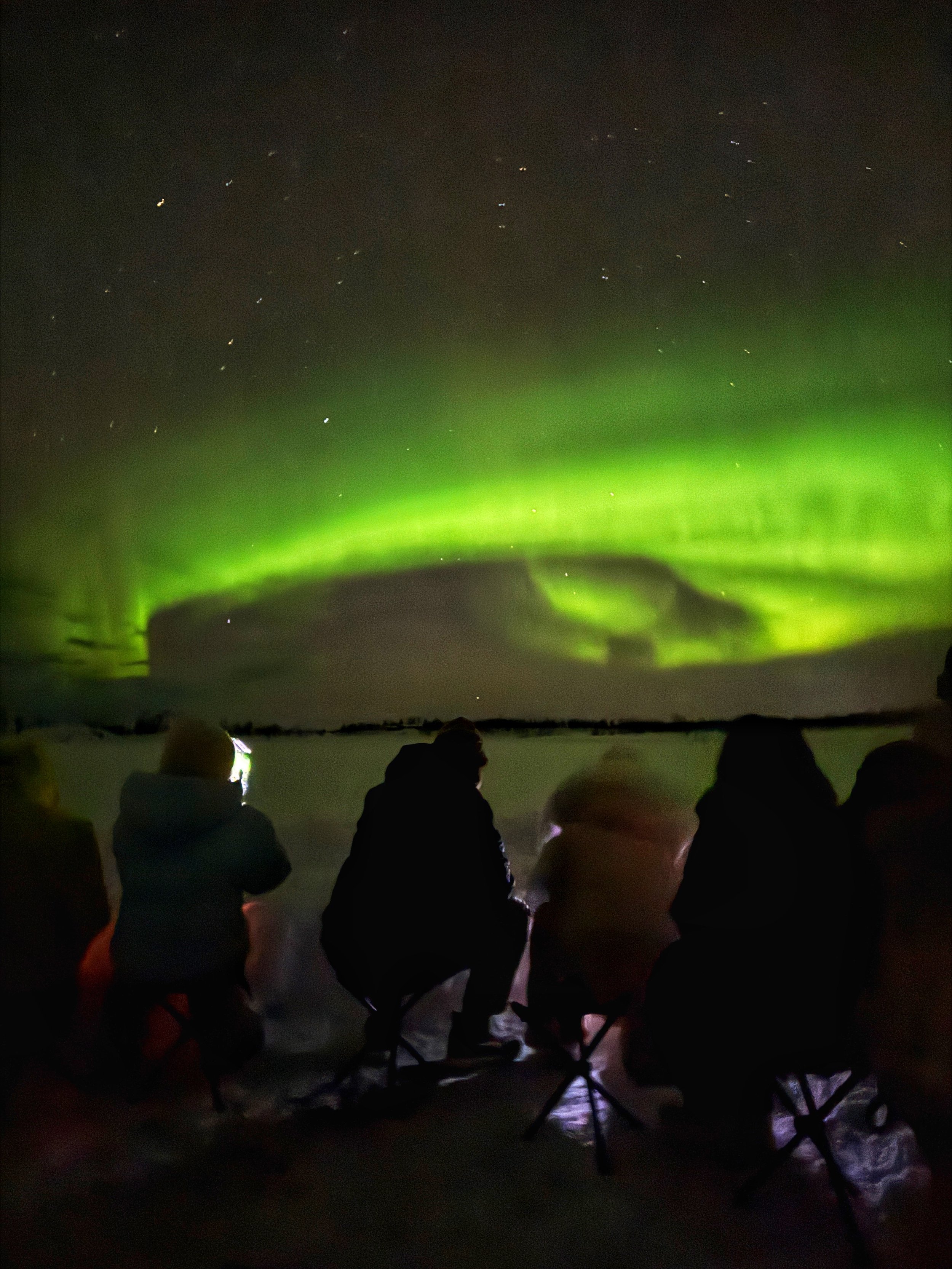
And then, almost without warning, the sky begins to move.
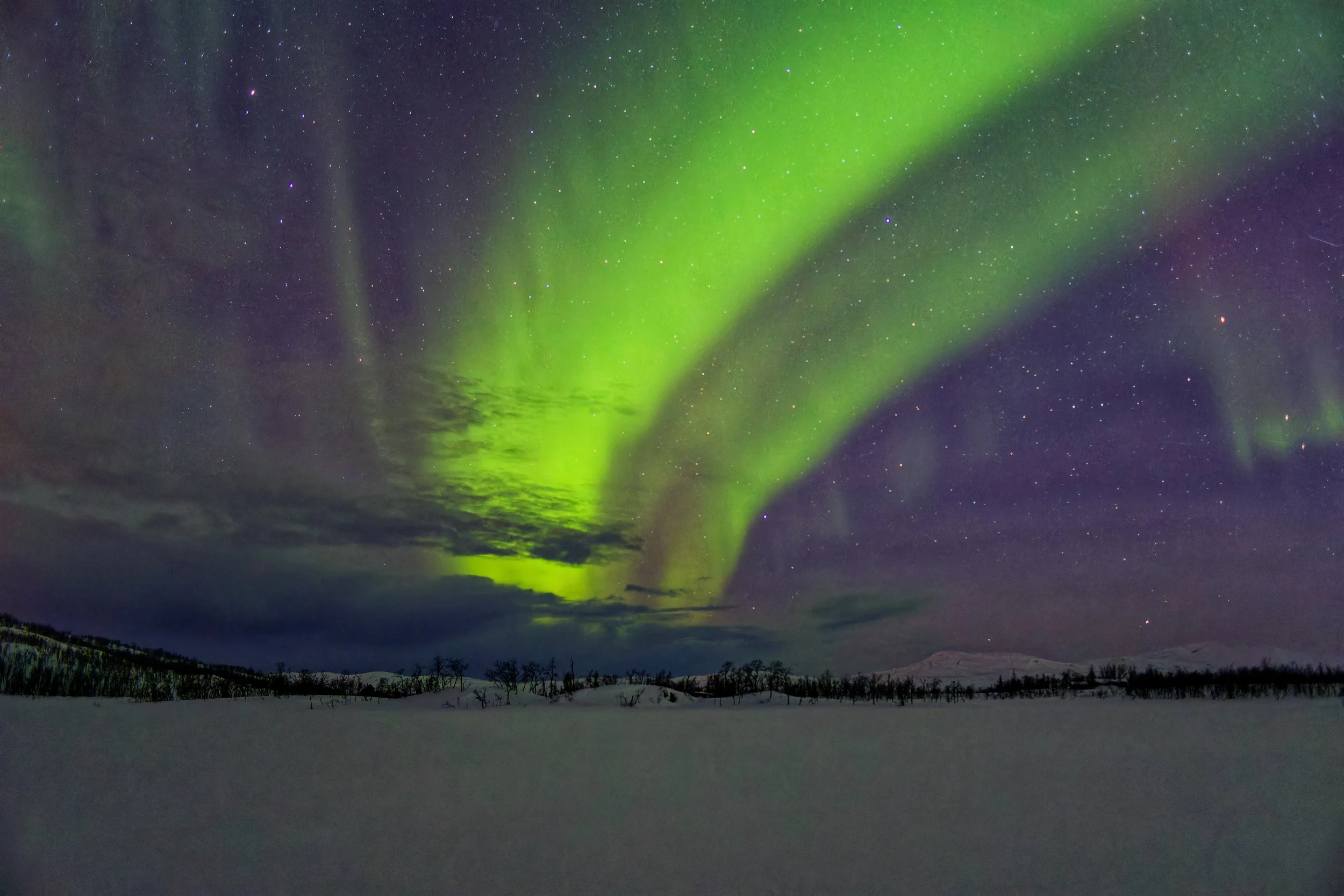
A faint ribbon appears above the horizon. It grows brighter, stretching across the night like a curtain caught in a silent wind. Green light spreads over the mountains and across the frozen ground, shifting and folding in slow, impossible shapes.
For a moment everyone forgets the cold.
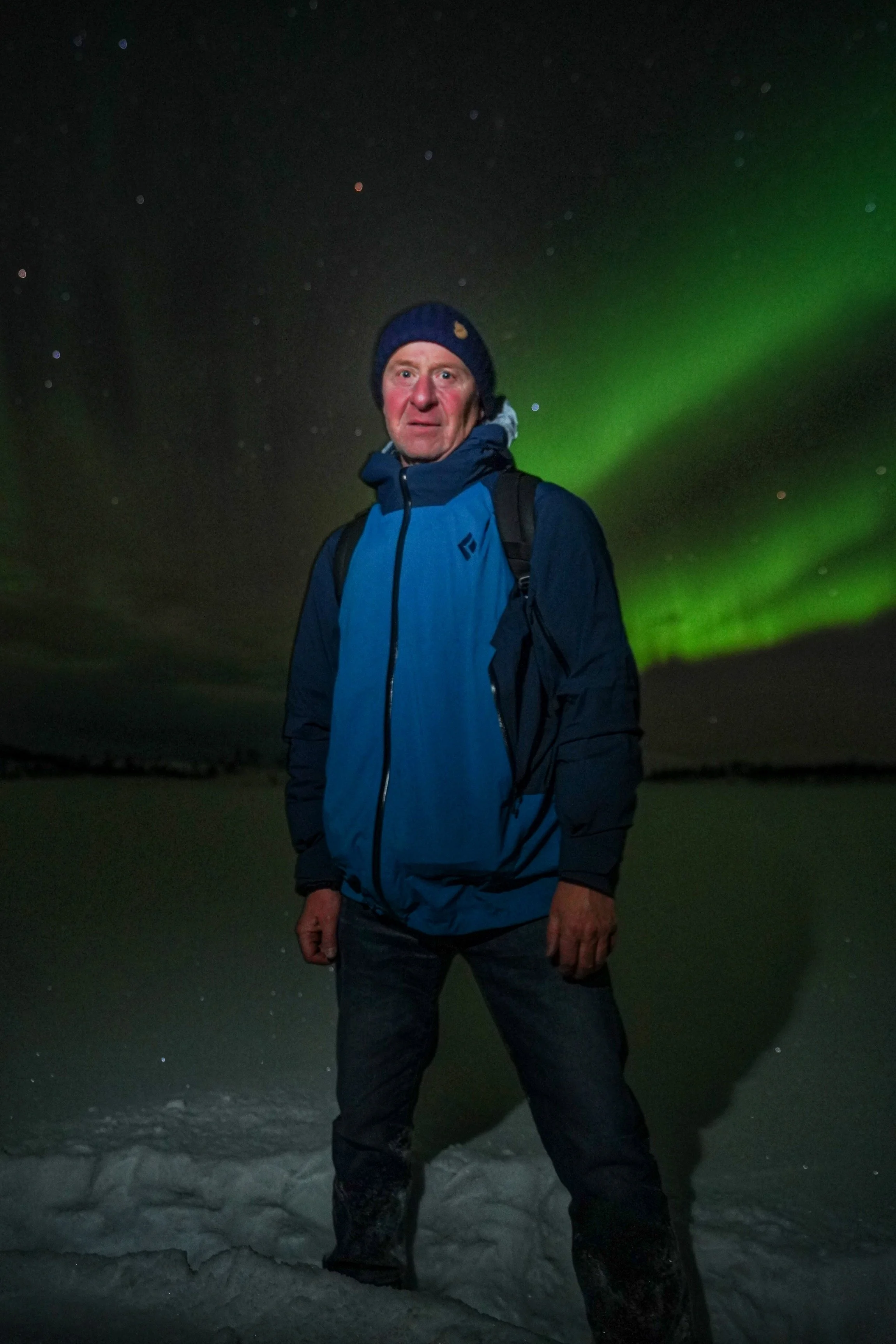
Phones lower and voices fade until everyone is simply looking up.
The aurora does not last long.
Soon the light fades again into the dark, leaving only stars above the quiet snow and the soft crackle of the fire.
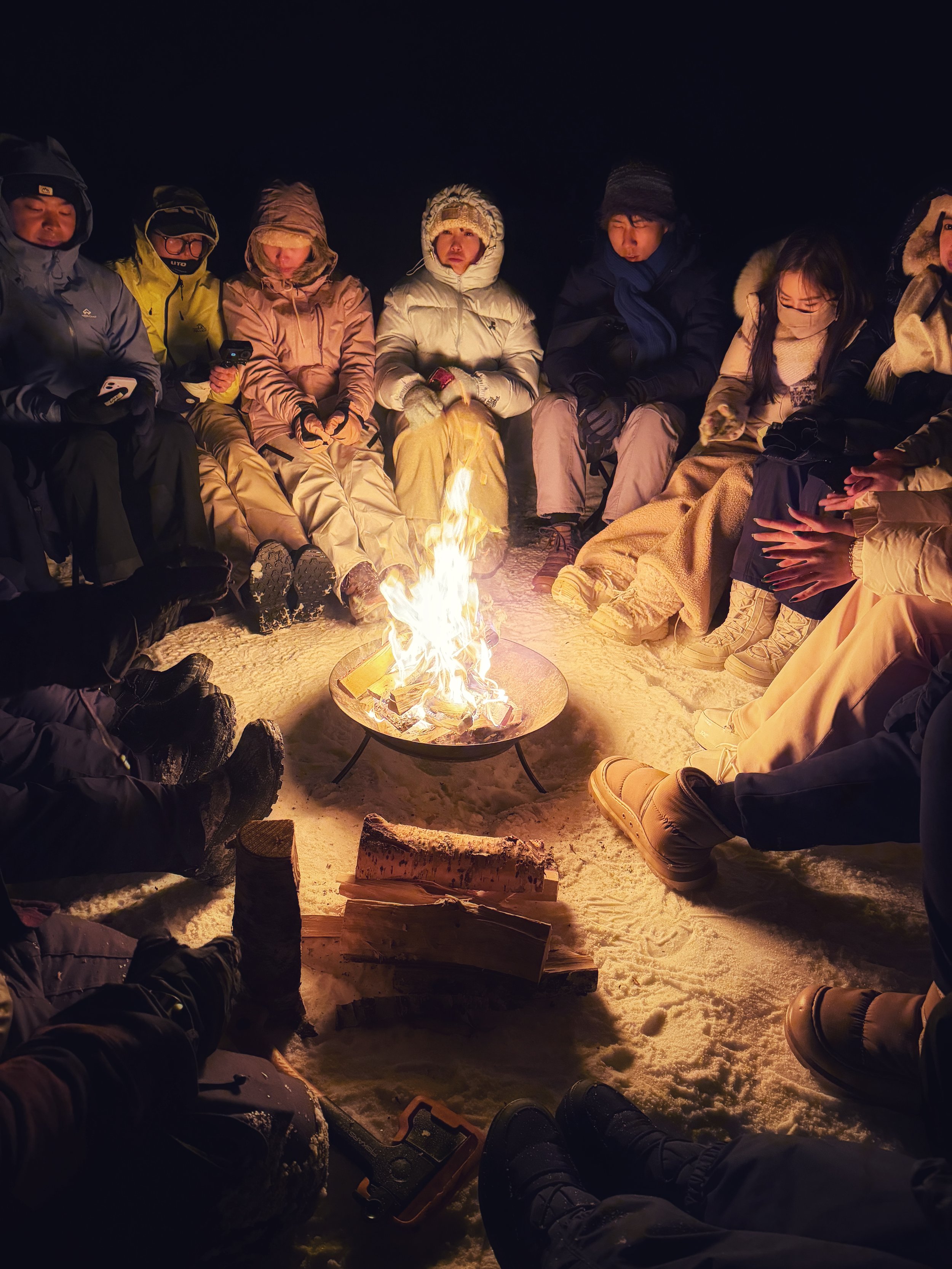
But the feeling lingers. A brief reminder that in the far north, the sky is never entirely still.
Tromsø at Night
When the aurora fades and the crowds drift back toward the city, Tromsø becomes quiet again.
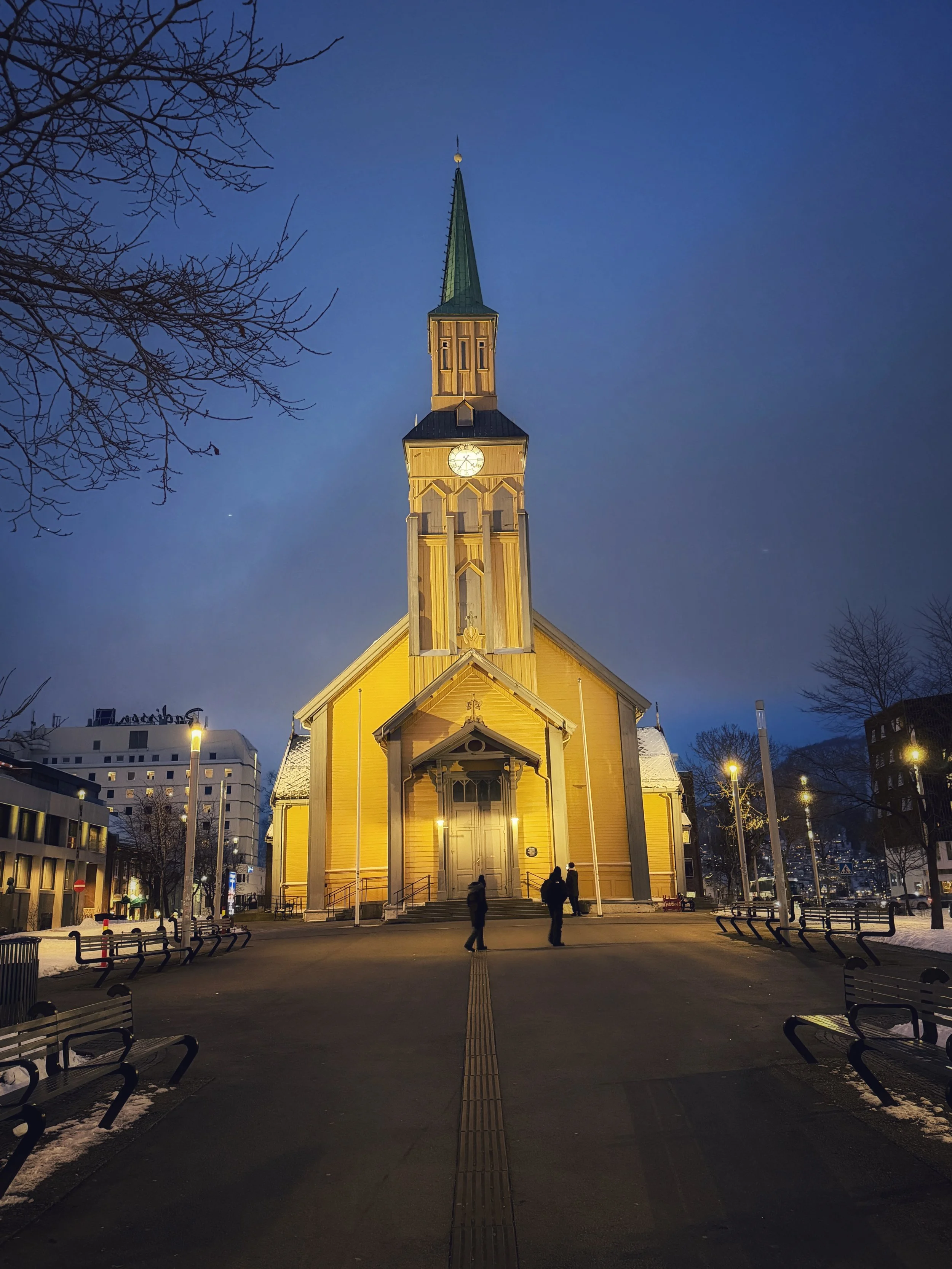
Streetlights glow softly on empty sidewalks. The wooden cathedral rises in the cold air, its tower reaching into a sky that never becomes completely dark. Across the water, the sharp white lines of the Arctic Cathedral shine against the mountains.
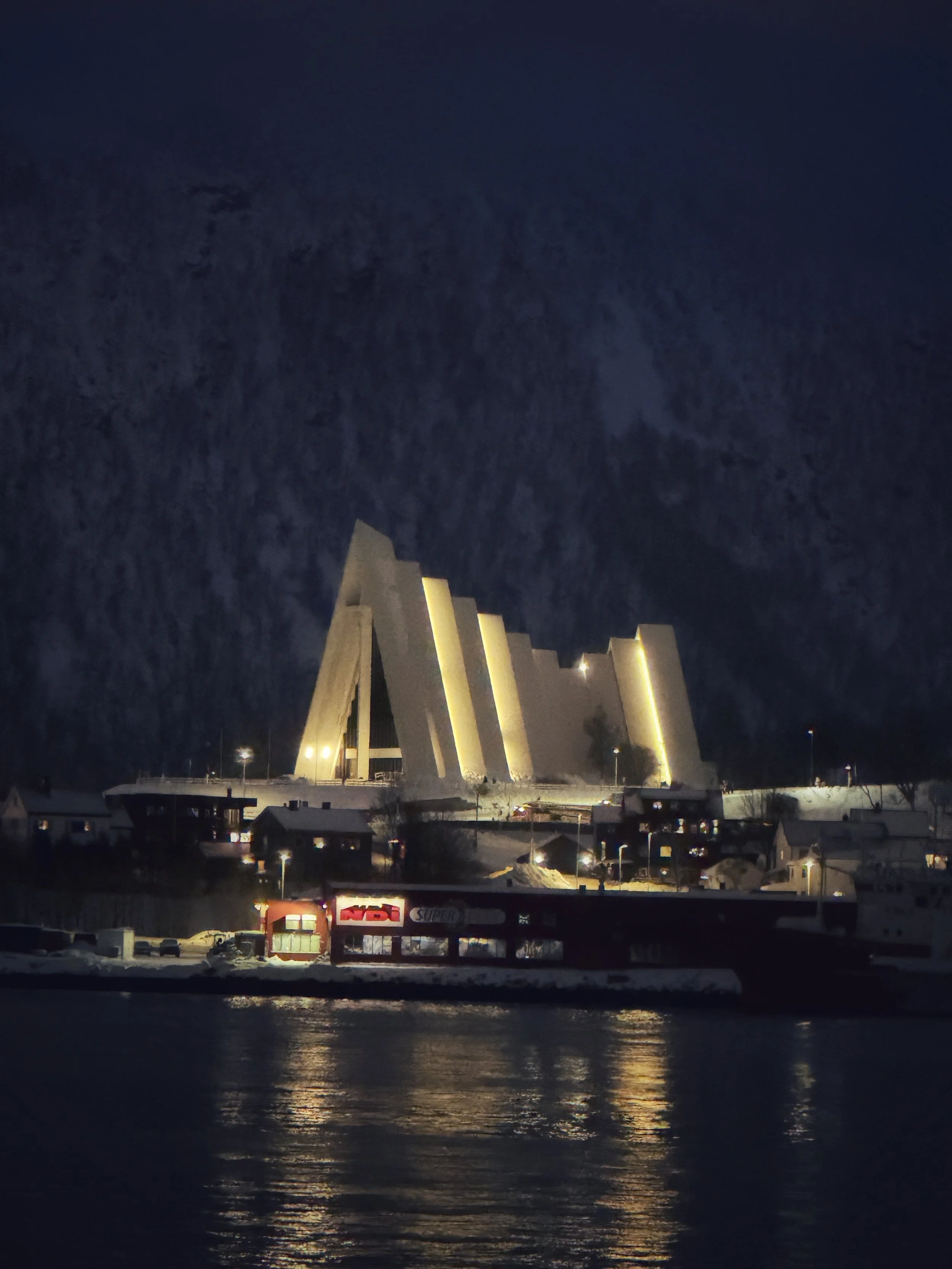
The harbor is silent. Only the slow movement of the water breaks the reflections of light.
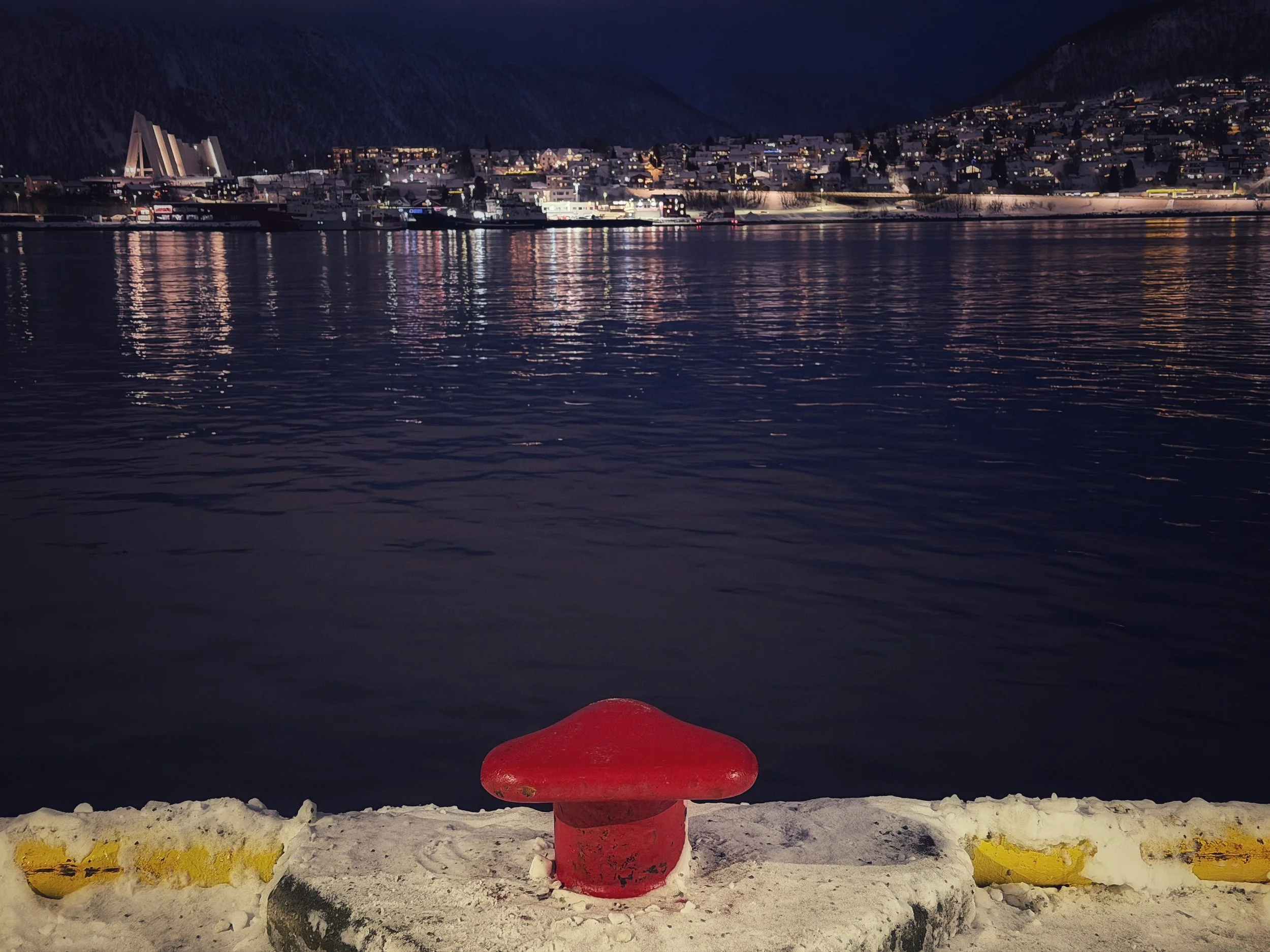
In the Arctic winter, darkness lasts for hours. The city settles into a deep blue light, with snow still visible long after the streets have emptied.
And then, almost unnoticed, the sky begins to change.
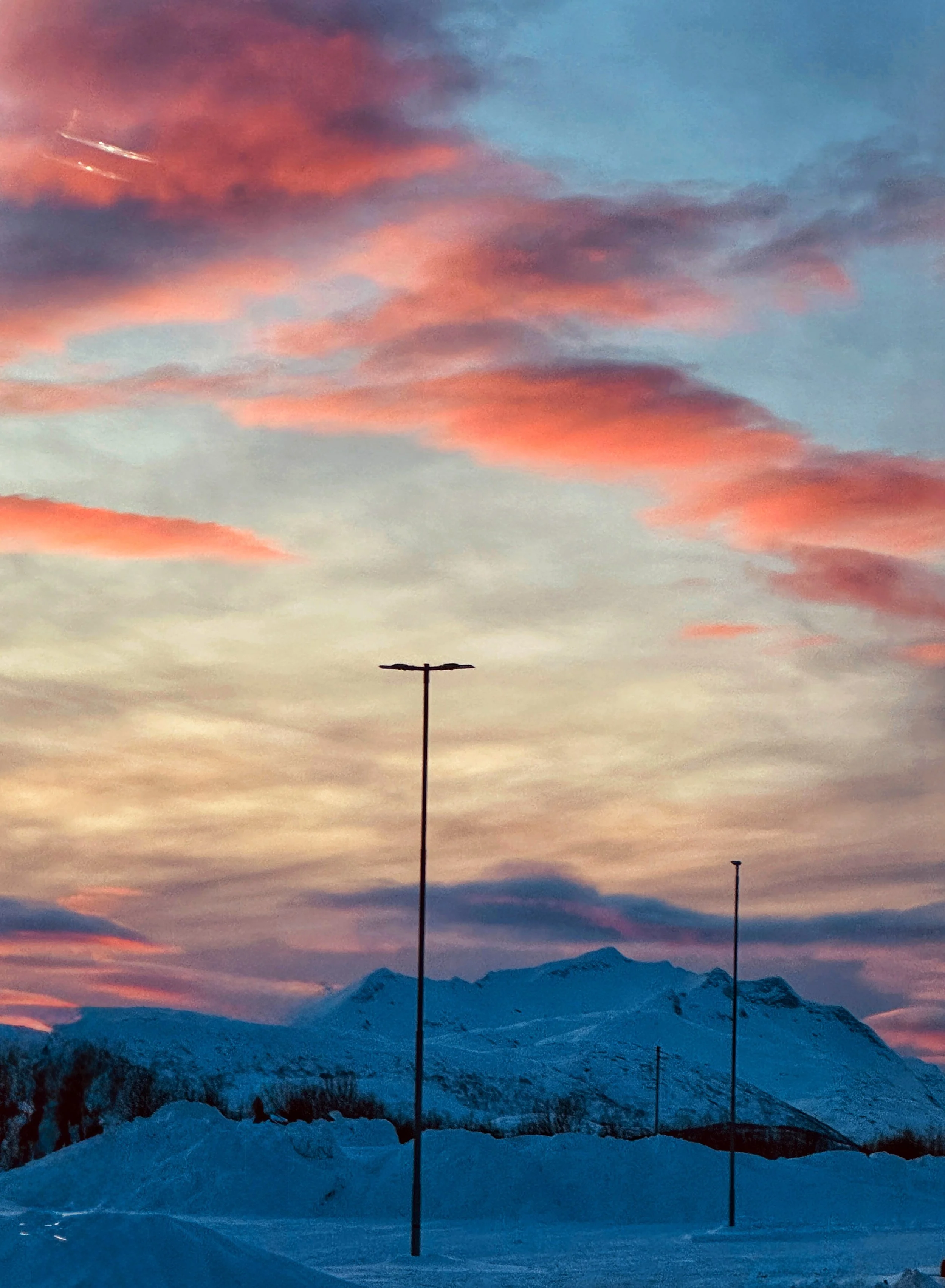
A faint color appears behind the mountains. Clouds catch the first light of morning, turning from grey to rose and pale gold.
Gradually, the mountains emerge again above the fjord, the same ones that had been hidden in darkness when we arrived.
Nothing happens suddenly here. The changes are slow enough that you begin to notice them only after they have already begun.