Letters to Milena
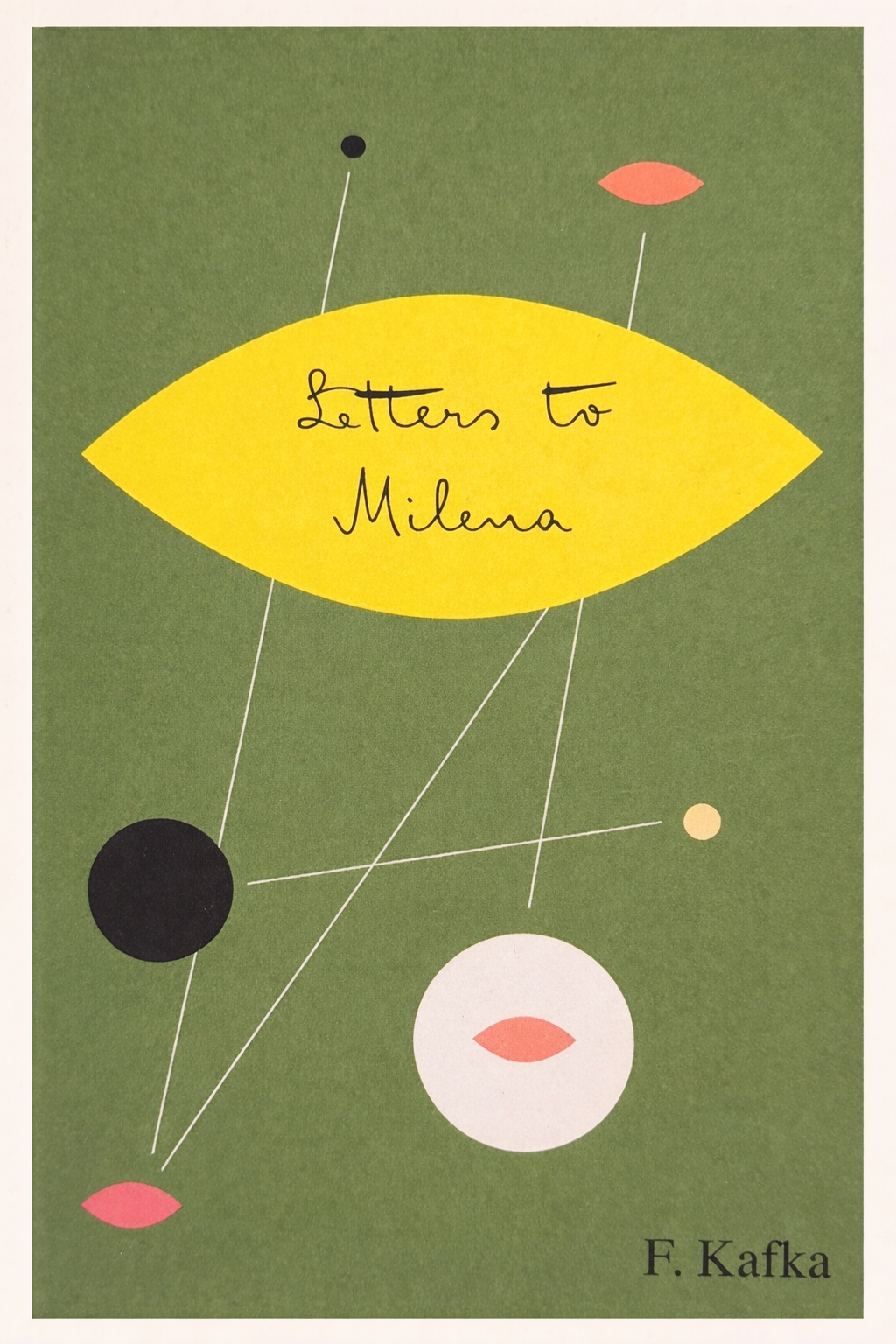
Book cover of F. Kafka’s Letters to Milena
Synopsis
Letters to Milena is a collection of correspondence between Franz Kafka and Milena Jesenská, a Czech journalist and translator who was the first to translate Kafka’s works into Czech.
The letters date mainly from the early 1920s, when Kafka was already seriously ill with tuberculosis.
Their correspondence began through Milena’s work as a translator, but soon became intensely personal. Kafka writes to her about his illness, his fears and his difficulty forming a close relationship with her.
He repeatedly moves toward Milena and then pulls away, wanting intimacy while seeming frightened by what it would require of him.
Milena was married, and the two were rarely able to be together. Their correspondence gradually became less frequent as Kafka’s health worsened, but their relationship remained important to both of them.
Letters to Milena — An Extended Reflection
Reading Letters to Milena can feel uncomfortably intimate, as though you have been allowed to read something that was never meant for you.
The correspondence begins with literature and translation. Milena Jesenská had begun translating Kafka into Czech, and their letters initially grew out of that connection. But very quickly the subject becomes Kafka himself. As the correspondence develops, Kafka writes increasingly about his illness and about what Milena has come to mean to him.
What interested me most was how difficult intimacy seems to be for him. Kafka wants Milena close, sometimes desperately so, yet he repeatedly pulls away from the possibility of actually being with her. He can describe what he feels with extraordinary precision, but that precision rarely brings him any peace. If anything, the more closely he examines himself, the less capable he seems of simply accepting what he feels.
There is something exhausting about watching this happen across letter after letter.
His illness is always present. Tuberculosis affects where he can go, how he lives and how he imagines his future. But illness alone does not explain the distance between them. Kafka often seems frightened by ordinary life itself and by the demands that closeness to another person might make on him.
That is perhaps what makes his relationship with Milena so painful to follow. His affection for her never feels doubtful. What remains uncertain is whether he can live inside that affection rather than only write about it.
At times the letters come very close to Milena. At others, Kafka seems to retreat almost immediately after reaching for her. He explains himself, questions himself and then questions the explanation. The correspondence can become circular, even obsessive. Yet this repetition also makes the letters feel unusually honest. We are not reading a polished account written after the fact. We are watching someone think while he is still caught inside what he is trying to understand.
Milena’s presence is sometimes harder to grasp because most of her letters to Kafka have not survived. We encounter her largely through his replies and through the effect she has on him. That absence creates a strange imbalance. Kafka occupies almost all the space, while Milena remains partly beyond our reach.
And yet she never feels insignificant. Quite the opposite. The intensity of Kafka's responses constantly reminds us that someone is there on the other side of the correspondence, responding to him and sometimes understanding him better than he understands himself.
They are connected through language, sometimes with extraordinary intimacy, but language never quite solves the problem of being apart. Kafka can write what he cannot easily live. The letters bring Milena close to him for a moment, and then the distance returns.
I read Letters to Milena while preparing to travel to Prague, and the book began to affect how I imagined the city before arriving.
I did not expect Prague to explain Kafka to me. But after spending so much time inside these letters, I became curious about the physical world behind them: the streets he walked and the places that were part of his daily life. A writer who had existed for me largely through books was suddenly connected to an actual place I was about to visit.
That changed the way I approached Prague.
I was less interested in searching for a city that somehow “looked like Kafka” than in understanding the distance between the streets I could walk through and the private world contained in his letters. What I encountered was a living city, very different from the literary Prague I had carried there with me.
And still, Kafka was difficult to remove from it.
There were moments when a particular street or room made the letters return to me, simply because reading had given certain places a different weight.
Perhaps that is what Letters to Milena gave me before Prague.
It did not explain Kafka, and it certainly did not explain the city. But when I finally arrived in Prague, I was still thinking about how close Kafka and Milena could seem in their letters, and how much could remain unresolved between them.