Hunger Before the North
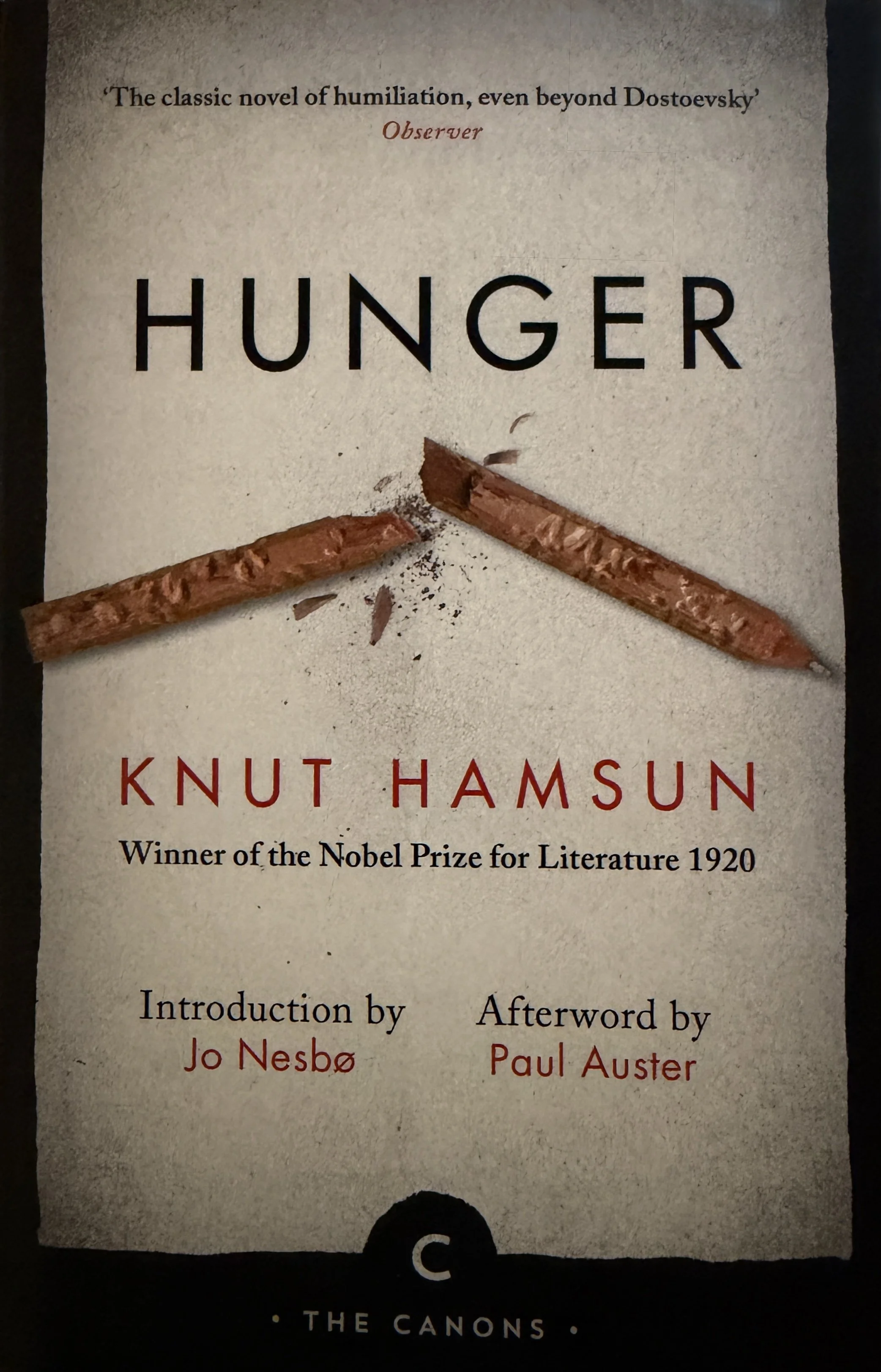
What unsettled me most in Hunger was not the narrator’s poverty, but the way he repeatedly makes his own situation worse.
From the beginning, his behaviour is difficult to predict. He refuses help, makes decisions that seem irrational and sometimes appears almost determined to push himself further into hunger and isolation.
That is what made the novel disturbing for me. His suffering comes from circumstances he cannot control, but also from choices I often found impossible to understand.
He wants to be recognised and to feel that his life has some importance. Yet when help becomes possible, he often pushes it away.
His pride is difficult to separate from his suffering. He refuses help when he clearly needs it and lies when honesty would make things easier. Again and again, preserving his dignity seems more important to him than improving his situation.
At one point he imagines:
“God sat up in his heaven keeping a watchful eye on me, making sure that my destruction took place according to all the rules of the game, slowly and steadily, with no let ups.”
That sentence stayed with me because the narrator imagines his destruction almost as a process being carefully carried out. His decline does not need a single catastrophic event. It happens gradually, through hunger, bad decisions and his repeated refusal to accept what might help him.
One image affected me particularly: the pieces of paper he keeps, blank or covered with writing that has little value, yet treated as though they matter. By that point he owns almost nothing, and still he needs these scraps to mean something. I found that painfully human.
His attitude toward himself changes constantly. At times he feels superior to everyone around him; soon afterwards he can barely function. Much of the cruelty in the novel comes from watching him recognise what he needs and then refuse it.
The people around him are rarely deliberately cruel. Most simply continue with their own lives. That ordinary indifference makes his isolation more disturbing because there is no single person or event to blame for what is happening to him.
His decline feels gradual, but increasingly difficult to reverse.
By the end, what stayed with me was the sense of being trapped inside a mind that can see its own behaviour without being able to change it.
Reading Hunger before travelling north felt strangely appropriate. There is something austere about the book that I associated with winter: very little comfort, very little distraction, and nowhere for the narrator to hide from himself.
That severity is what remained with me after finishing it. The novel does not offer relief, but it does leave you looking more closely at how pride, fear and self-deception can make suffering harder to escape.