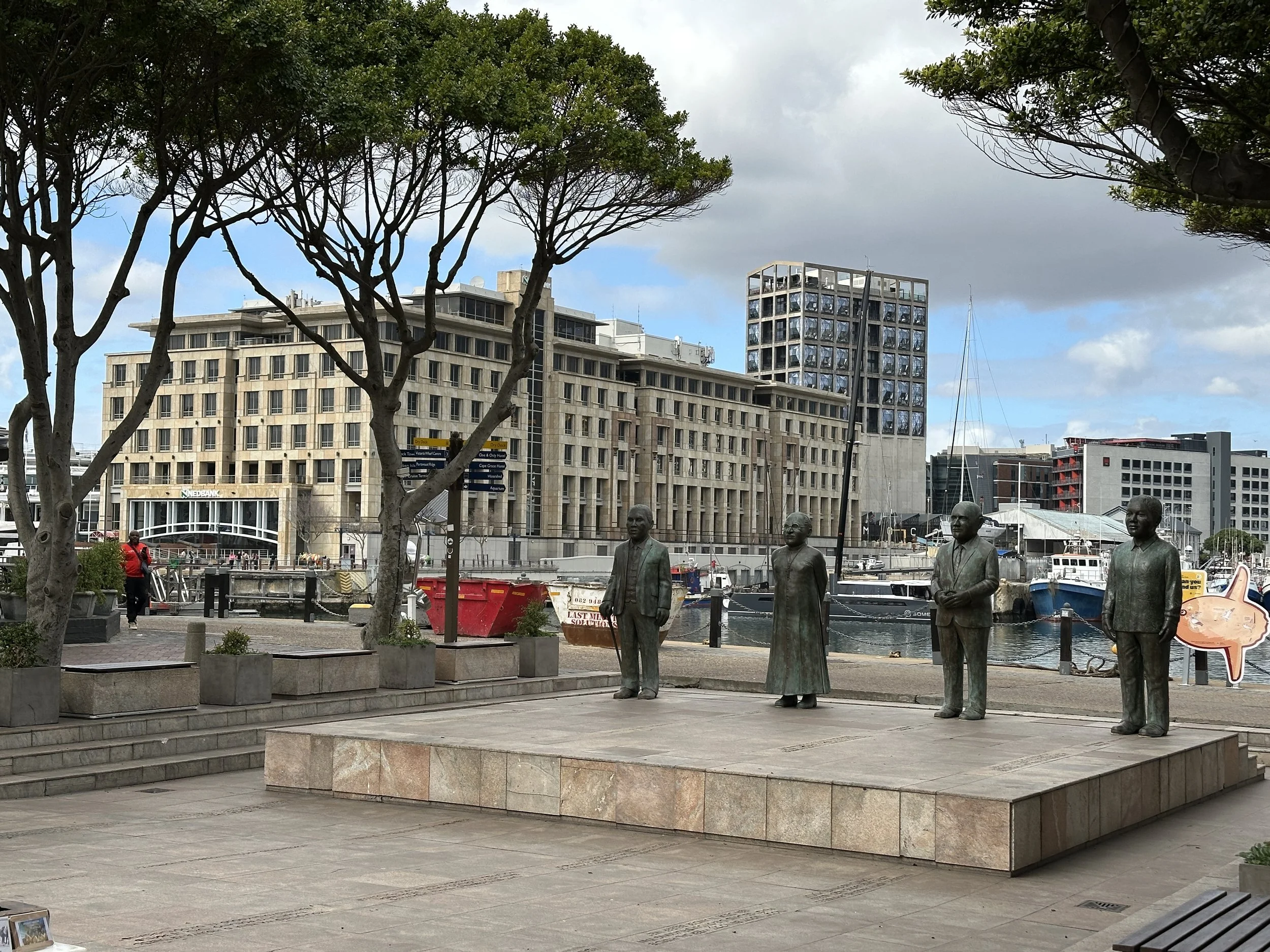
Cape Town – Between Sea and History
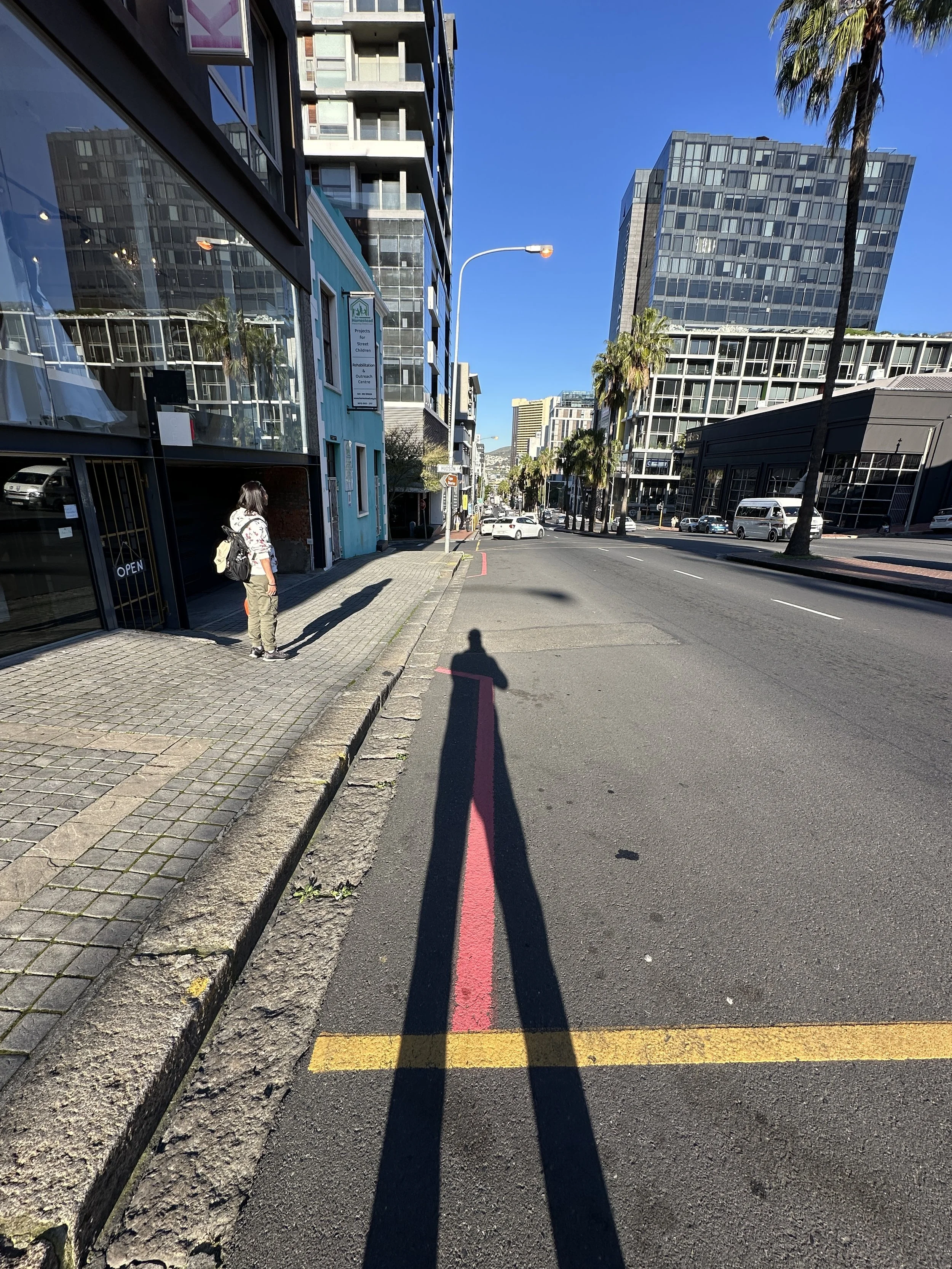
After Johannesburg, Cape Town immediately feels like a different country.
It is brighter, more orderly and clearly more accustomed to tourists. The ocean and the mountain dominate the city, and everything seems to move at an easier pace. It is a beautiful city, undeniably so, and visibly wealthier, at least on the surface.
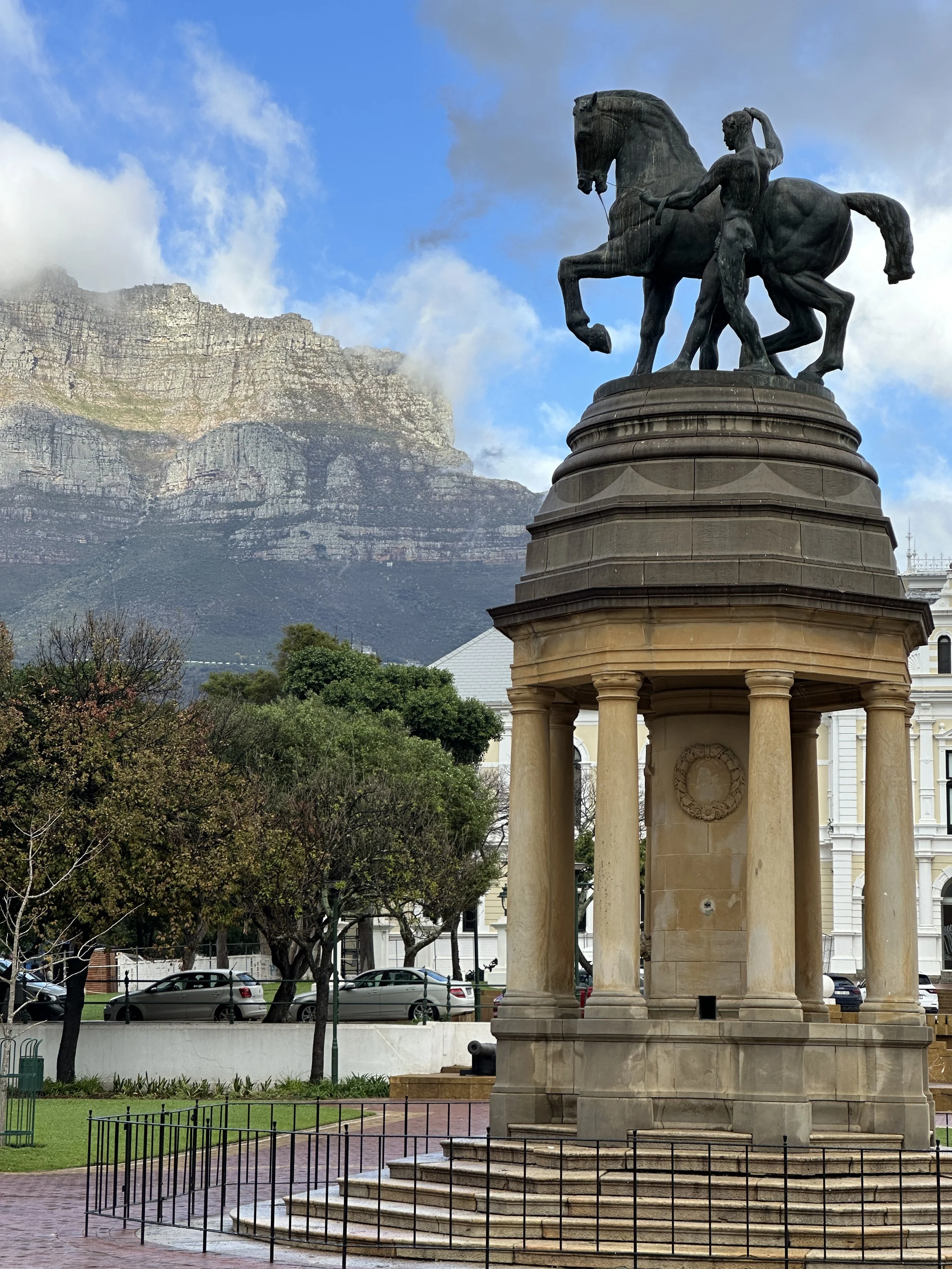
And yet, after a few days, a certain unease begins to appear.
Houses are surrounded by fences, often electrified. The same advice comes up repeatedly: don’t walk around too much, stay within the tourist areas. Nothing overtly threatening happened to us, but the precautions were always there, a reminder that the city’s beauty exists alongside deep divisions that have not disappeared.
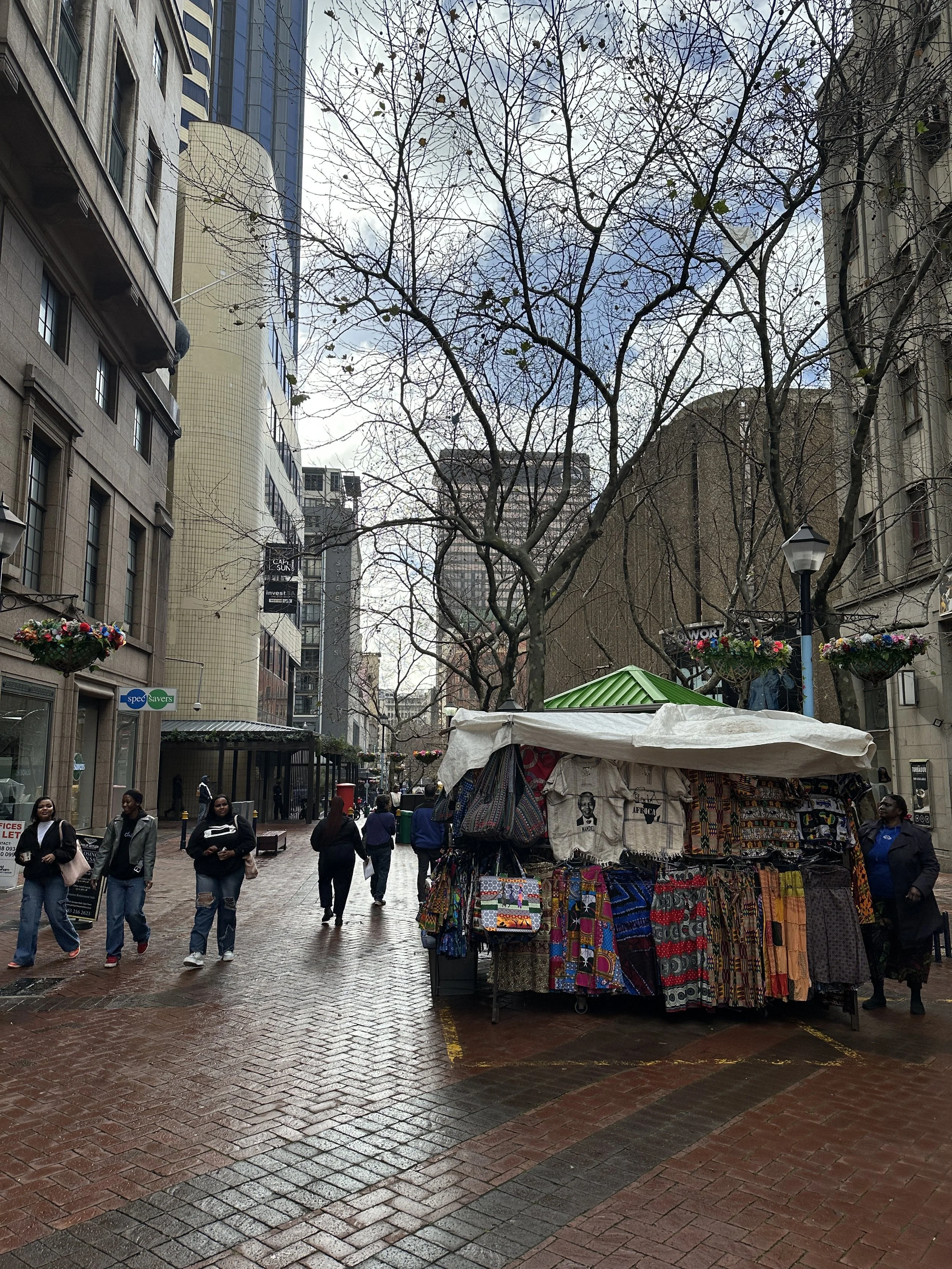
The legacy of apartheid is still visible in how the city is divided and in the very different conditions people live in from one area to another. That became harder to ignore the longer I stayed.
When I photographed Cape Town, I found myself returning to that contradiction.
I was still drawn to what I saw, but my first impression of the city had become more complicated.